Socially Responsible Investments Support Conservation Goals
Source

About This Case Study
Otsego Land Trust's socially responsible investments support conservation goals and objectives, aligning the organization's money with its mission.
© 2026 Land Trust Alliance, Inc. All rights reserved.
Disclaimer
These resources are provided "as is" for informational purposes only, without warranty of any kind. They do not constitute legal or professional advice and do not create an attorney-client relationship. They may not reflect current legal developments and should be adapted for your organization with qualified professional help. The Alliance is not liable for any damages arising from use of or reliance on these resources. Views in individual posts and third-party links/logos are not Alliance endorsements. The Alliance is committed to equal opportunity and does not condone unlawful discrimination.
For accreditation-related materials, please also consult the Land Trust Accreditation Commission website.
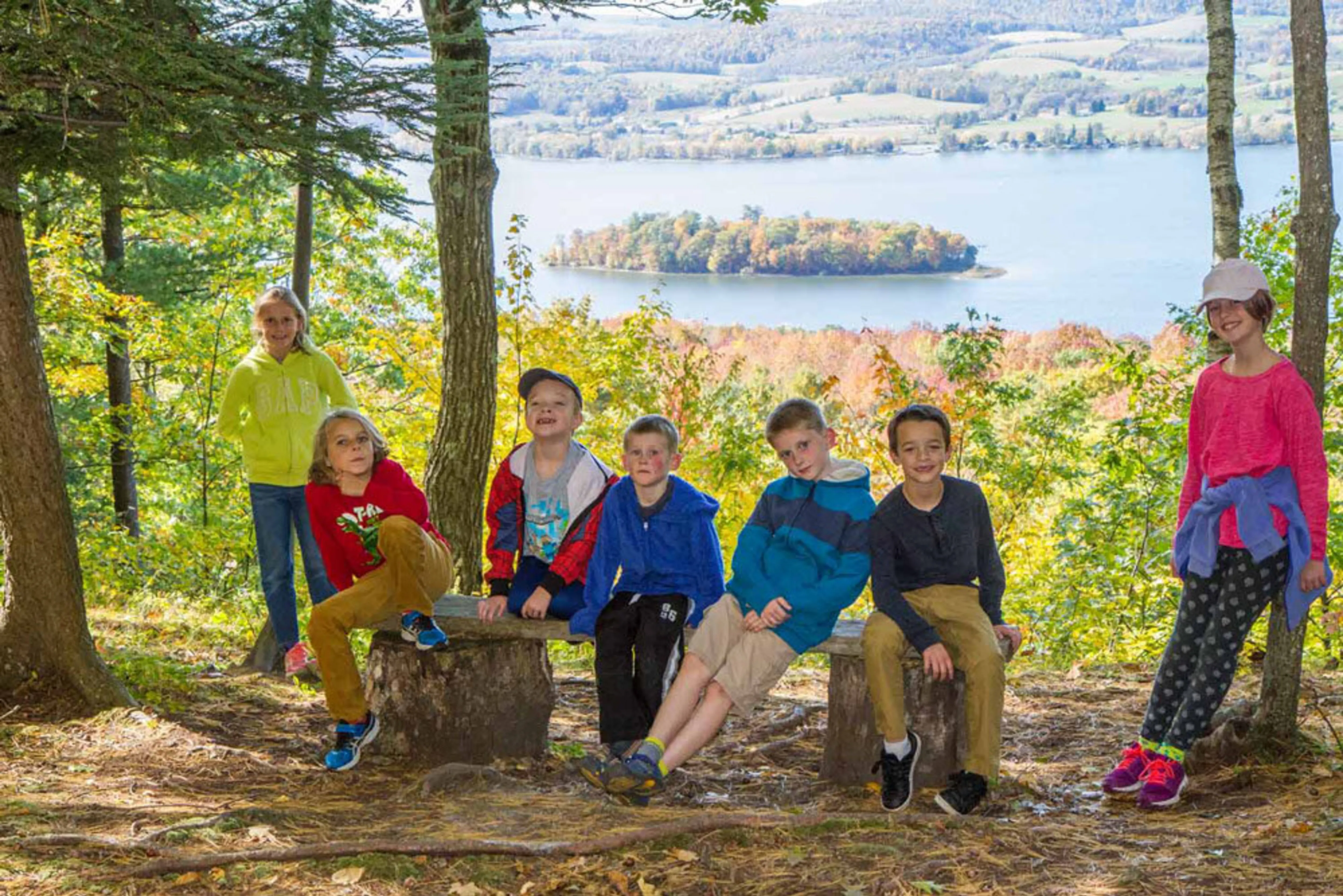
Otsego Land Trust works to conserve its region’s natural heritage of woodlands, farmlands and waters that sustain rural communities, promote public health, support wildlife diversity and inspire the human spirit. Headquartered in Cooperstown, New York, OLT works in the in the Upper Susquehanna watershed — the largest river basin on the Atlantic Seaboard – which drains 4 million acres of south-central New York before flowing into the Chesapeake Bay. Primary conservation efforts target the Upper Susquehanna sub-basin, which include Otsego Lake as well as the watershed of one of its major tributaries, the Unadilla River. The region is further defined by its diverse human and natural landscapes as well as numerous plant and animal species, some threatened and endangered. Agriculture, including forestry, forms the backbone of the economy and also provides critical habitat to many bird species.
Value of the land and habitat
The landscape boasts a mosaic of significant natural areas as well as rural and historic sites, making the area of regional and national conservation significance. Scenic Lake Otsego has been called “the cradle of American literature” and has been praised by artists and writers and immortalized in the novels of James Fenimore Cooper. Nearly 80% of Otsego County is dominated by three main land cover types: Evergreen-Northern Hardwood Forest, Cropland and Sugar Maple Mesic Forest. Both Evergreen-Northern Hardwood Forest and Sugar Maple Mesic Forest are extremely high in biodiversity. Evergreens and hardwoods provide habitat for an estimated 148 species, while sugar maples shelter 162 species of the county’s 366 mammals, breeding birds, amphibians and reptiles. Croplands provide habitat for approximately 97 vertebrate species. The land trust’s Conservation Blueprint defines ten conservation areas based on their value as aquatic, terrestrial, agricultural and historic resources as well as for their proximity to protected lands and for the existence of threats that could result in loss of critical natural habitat, farmland, or historic sites. Since the development of the Blueprint in 2006, Otsego Land Trust has regionalized and is actively protecting borderlands in adjacent counties including Delaware, Herkimer, Schoharie, Madison and Chenango Counties.
Conservation Concerns
Unprotected land accounts for 96% of Otsego County. The majority of the county’s unprotected land — nearly 60% of the parcels and 33% of the total acreage — is residential. Spatial analysis of the Otsego Land Trust Region shows that the northern portion of the Otsego Land Trust Region contains prime agricultural soils and highly productive farms that, because it is relatively flat and easily accessible from U.S. Route 20, is under pressure from development. Private forests in the southern portion of the region are expected to face the greatest pressure from housing development, with portions expected to grow from Rural II (17-64 housing units per acre) designation to Exurban (65 or more units/acre) by 2030. This growth of development is expected to pose the greatest threat to natural areas in the region, including grasslands, deciduous forests and wetlands, with associated threats to plant and animal species and loss of economic opportunities. Historic and cultural resources are also likely to be threatened under growing development pressure.
In addition to threats of future development, which can negatively impact species and habitat biodiversity as well as historic uses and scenic values, current environmental problems present conservation concerns. For example, water quality impacts from nonpoint source pollution are exacerbated by the area’s highly permeable soils, which allow contamination to travel long distances without being absorbed. While the land trust is very engaged in regional planning dialogs, it also recognizes that conservation work does not occur in a vacuum — global climate change presents significant and daunting ecological challenges.
What’s being done and how
Otsego Land Trust uses traditional conservation tools such as conservation easements, purchase of development rights, land ownership, and bequests to address development pressures. In part to address water quality impairments as well as to protect biodiversity and scenic values and reduce development threats, the land trust has used spatial analysis to layer multiple characteristics to objectively inform acquisition goals — the five major components of this spatial analysis are: lands abutting protected areas, waterway buffers, scenic value, agricultural value and species richness. In addition to these conservation priorities, OLT focuses on community conservation and ensuring that protecting the healthy lands and clean waters that sustain all communities is relevant and a priority across diverse demographics. The organization's outreach and education efforts, as well as a careful investment strategy, reflect the organization’s commitment to supporting long-term conservation objectives by addressing climate change.
Through its Climate Change Initiative this small land trust has taken significant steps to link the surrounding communities with educational programs. Additionally, the conservation of forests, farmlands, wetlands, open space and wildlife habitat makes positive contribution to mitigating the negative impacts of climate change by avoiding development to begin with. A number of OLT’s conservation easement landowners are personally invested in renewable on its protected properties and actively support renewable energy in its communities. By engaging in strategic socially responsible investment, Otsego Land Trust notably takes mitigation efforts a step further. This process, which Executive Director Virginia Kennedy describes as “a learning and a teaching moment” involved exemplary efforts of staff, board members, and consultants who worked together to explore the nuances of investment strategies and options in order to identify options that aligned with the land trust’s conservation mission. As staff members and the board’s Investment Committee learned more, they became more convinced of the positive impacts of socially responsible investment strategies — in addition to aligning investment choices with core values, SRI can send positive signals to financial markets. SRI also reflects a commitment to ethical investment decisions, enabling mission-driven organizations to fulfill their fiduciary duties by managing trust assets to maximize conservation benefits.

Current implementation status and next steps
Working together with an investment manager, board and staff members agreed on a phased strategy. After completing a questionnaire to align conservation goals and investment opportunities, OLT identified available offerings where returns would not be diminished while investment in fossil fuels would be screened out as much as possible, the first phase in their two-phase process. In phase two, which is expected to begin in 2016, staff and board members will revisit their holdings and reassess their ability to further avoid fossil fuel investments moving forward. In addition to committing to engage in socially responsible investment choices, OLT is taking steps to consider climate change across the spectrum of their conservation activities. These efforts include considering revisions to conservation easements to allow for appropriate small-scale renewable deployment, highlighting on the ground actions that support mitigation objectives and continuing to support education and outreach efforts in the community.
Key partners
While the Otsego Land Trust’s SRI decision-making processes was primarily internal, these efforts were supported by staff, board members, outside investment experts including Royal Bank of Canada, NBT and Divest-Invest Philanthropy Initiative.
Lessons learned
Ethical investing matters.
Aligning investments with your mission makes good sense and is the ethically responsible thing to do. Investing in a socially responsible manner is consistent with conservation objectives and can be approached in a way that also allows good governance in terms of a board’s fiduciary responsibilities.
Change takes time.
Be patient and allow time for research regarding investment-divestment strategies and investment managers. A staged approach to socially responsible investing allows an organization to move toward comprehensive investment goals while allowing board, staff and supporters to understand the process and feel comfortable with decisions to invest in a way that is consistent with a conservation mission. Changes such as full divestment and avoided investment can take time, but impact positive socially responsible investment is a good step forward.
Land trusts can inspire positive change.
Conservation happens on many scales, presenting many opportunities to engage. It helps to learn how small scale actions can have larger impacts in order to communicate why it is important to take these steps.

Otsego Land Trust
Location: Otsego Region, NY (includes Otsego County and portions of Herkimer, Oneida, Madison, Chenango, Delaware, and Schoharie Counties in central New York)
Since 1988 Otsego Land Trust has protected over 10,000 acres of protected lands, over 300 acres of which OLT owns and stewards for public access. The organization has 5 staff members and 400 supporters.
Moving Towards SRI
Thoughts from Otsego Land Trust
Otsego Land Trust located in Cooperstown, NY, has a three-pronged approach to land protection:
We incorporate into all of our work and communications, in whatever form they take, the imperatives of reciprocity and responsibility — in other words, what goes around comes around, and we’d better not just be responsible to the earth that sustains our lives in the present, but also to the generations coming after us whose lives are totally dependent on the decisions we make today.
In that context, the ecological, environmental challenge of climate change is one of biggest — some would say the biggest — challenges human beings have ever faced.
For Otsego Land Trust, as for so many land trusts, that reality can seem daunting. OLT has encountered within our organization and within our community the whole array of responses to climate change that are prevalent everywhere. We have moved forward with an understanding that climate change should not be a political issue, but a conservation issue based on legitimate science, just like, for example, invasive species, wetlands restoration and habitat preservation. In this context, we have incorporated climate change in our recently completed strategic plan, which reads that OLT will “conduct an assessment to determine organizational responses to contemporary conservation challenges — such as climate change, invasive species, biodiversity decline, the damage to or destruction of important habitats and ecological balance and other environmental challenges — that have a direct impact on organizational activities including: the creation of easements, the stewardship and monitoring of easements, and public education on major conservation issues.”
Activities to date include making the decision to engage in Socially Responsible Investing. In Otsego Land Trust’s initial foray into investment, the board felt the need to be extraordinarily cautious. We invested in a socially responsible portfolio with a negative screen on fossil fuels only where it would not increase anticipated risk or diminish returns. OLT wanted investment returns that were consistent with our conservation mission and that would also meet our fiduciary duty to manage OLT monies responsibly and in a way that generates resources for the organization to meet our mission. With the guidance of a good investment firm , Divest-Invest Philanthropy to whom we were referred by 350.org and a good deal of research and reading into socially responsible investing on our own, we have been able to meet these investment goals.
We are also in the process of building a climate change page on our website focused on what our own OLT community members are doing to address climate change, along with educational resources for people interested in learning more. Since climate change has been made a political issue and can, like any other issue of politics, generate heat and controversy, we move cautiously but determinedly to address it within the context of our mission as a land trust. Within our organization, we make room for all perspectives while at the same time moving steadily forward in a way that acknowledges our responsibility as a conservation organization to address the conservation issue of climate change.
Helpful links
Climate change
Climate Change Evidence and Causes: An overview from the Royal Society and the US National Academy of Sciences
The Consensus Project
The Consensus Project measured the level of consensus in published, peer-reviewed climate research that humans are causing global warming.
Climate Change and National Security in the 2014 Quadrennial Defense Review
The U.S. Department of Defense just released its 2014 Quadrennial Defense Review. As the name implies, DoD releases this report every four years as a way of articulating its strategic direction.
Investment/Divestment
Adding Good Deeds to the Investment Equation
The argument for divesting from fossil fuels is becoming overwhelming
DivestInvest for Organizations
DivestInvest is a diverse, global network of individuals and organizations united in the belief that by using our collective influence as investors to divest from fossil fuels, and invest in climate solutions, we can accelerate the transition to a zero-carbon economy.