Growing Our Conservation Canopy
Source
Author
About This Saving Land
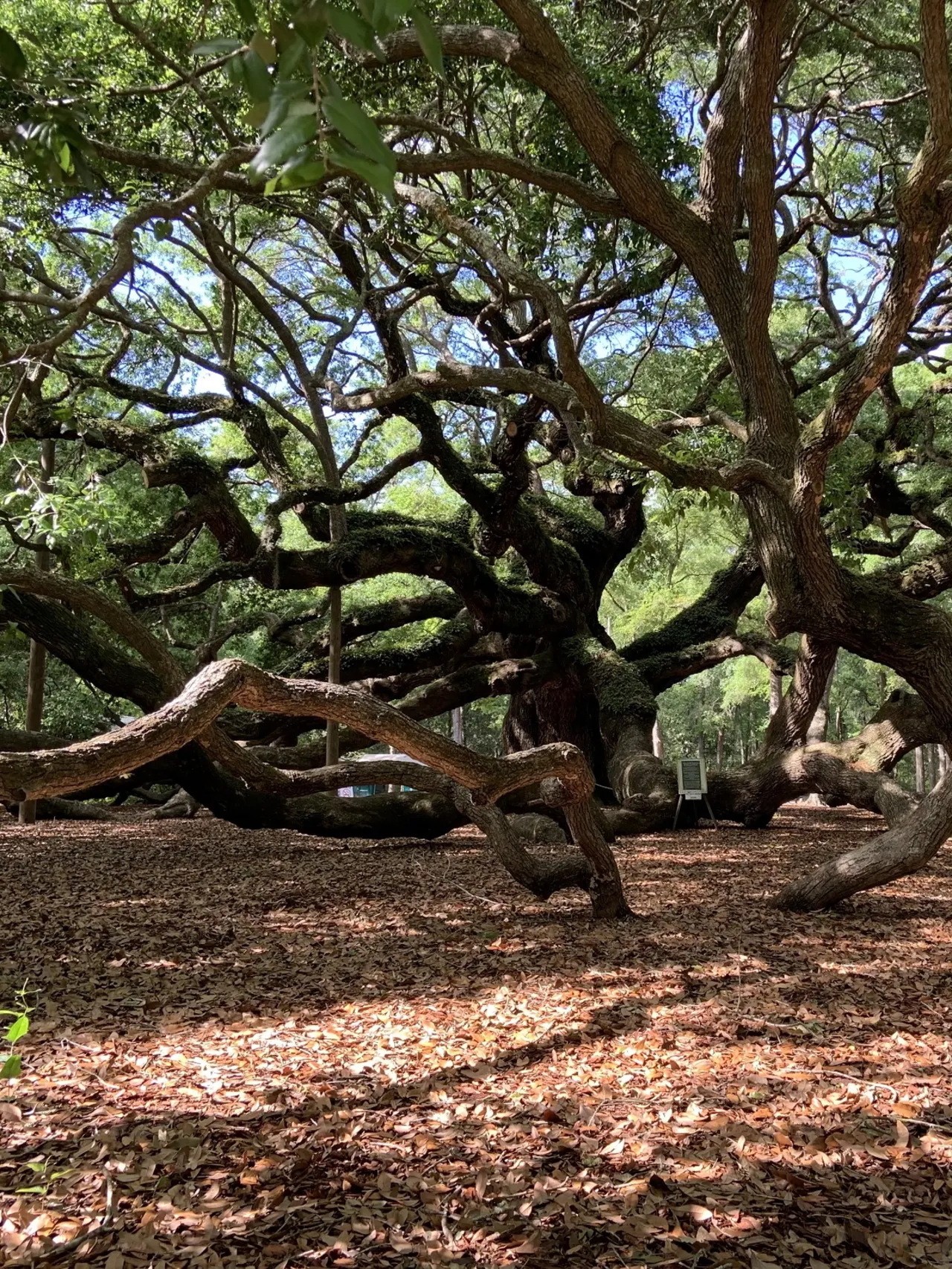
The land trust movement has grown steadily, like a young oak seedling into a vibrant and mature tree. In the coming decade, we are poised to grow a massive canopy, one that shouldn’t be measured just by size but by how many people will benefit from it. This is an edited version of Andrew Bowman’s welcome speech given on Sept. 15 at Rally 2022 in New Orleans.
Andrew Bowman is president and CEO of the Land Trust Alliance.
© 2026 Land Trust Alliance, Inc. All rights reserved.
Disclaimer
These resources are provided "as is" for informational purposes only, without warranty of any kind. They do not constitute legal or professional advice and do not create an attorney-client relationship. They may not reflect current legal developments and should be adapted for your organization with qualified professional help. The Alliance is not liable for any damages arising from use of or reliance on these resources. Views in individual posts and third-party links/logos are not Alliance endorsements. The Alliance is committed to equal opportunity and does not condone unlawful discrimination.
For accreditation-related materials, please also consult the Land Trust Accreditation Commission website.
Growing our conservation canopy
This is an edited version of Bowman’s welcome speech given on Sept. 15 at Rally 2022 in New Orleans. Watch the full speech below.
Today, I want to focus on what is going well for the land trust community. And when I talk about the problems we continue to face—many of which are quite serious—I will argue that we have reasons for optimism and power in our numbers that should compel us to take an active stance in tackling our biggest challenges. To help frame my remarks, I want to share a story about some of my experiences during the COVID-19 pandemic.
A few months into the pandemic, my wife, Alena, and I took a leap that we had contemplated for years: We bought a small farm in northern Michigan. It seemed like the perfect time to do so. With travel curtailed, we could stay at home and become one with the land. For 14 months straight, we studied the land, got to know its wildlife and experienced the seasons. During our first spring, we enthusiastically improved the low-lying portion of the farm that we had decided to dedicate to wildlife habitat. This involved planting hundreds of native, bareroot plants, shrubs and trees, including some swamp white oak seedlings. All of those seedlings made it through their first Michigan winter and seem to be thriving.
But I’m also a bit embarrassed to admit that we were impatient and demanded more immediate gratification. The same spring we put in our bareroot plants, we also bought two swamp white oaks that were well over 10 feet tall. They were on sale at the local native plant nursery, likely because they had outgrown their pots. We wanted to give them a good home, but mostly we wanted to see big oak trees on our property as quickly as possible.
But unlike the bareroot seedlings, the bigger trees struggled. They were rootbound, they dried out quickly and they required near constant attention from us to keep them alive. These trees are still with us today, but they look haggard and show few signs of new growth. Instead, they seem to be focused just on surviving.
Start small to grow big
Little did I know that our experiment in planting oaks provided a perfect illustration of some of the main points made by Dr. Douglas Tallamy in his 2021 book The Nature of Oaks. According to Tallamy, when it comes to oaks, it’s best to start small. In fact, he argues that it is ideal to start oak trees by planting acorns or bareroot whips because it allows a young oak to focus on building a massive root system that will sustain it for centuries. As he points out, a seedling oak may have up to 10 times more root mass than the biomass it shows above ground. In contrast, a large transplant is most likely going to simply sit there for years as it struggles to build a root system commensurate to its size.
Tallamy’s lessons have impacted how I think about managing the natural areas of our farm. They have also caused me to reflect on our strengths as a community and how we developed those strengths.
This past February, we commemorated the Land Trust Alliance’s 40th anniversary and the fact that, in the fall of 1981, a small group of visionaries convened at the Lincoln Institute of Land Policy in Cambridge, Massachusetts, and envisioned an organization that could support the small but growing number of land trusts emerging across the country.
The Land Trust Exchange was born months later and eventually became the Land Trust Alliance—an organization that has provided so much to guide and support land trusts, including Land Trust Standards and Practices, land trust accreditation, Terrafirma insurance and 35 Rallies. Think about how the land trust community has grown over the last 40 years and all that it’s achieved. For instance, America’s land trusts had collectively conserved more than 60 million acres, an area larger than all the land contained in America’s 63 national parks.
Our community started small and has grown in a steady and deliberate way, all along finding ways for land trusts to improve their operations, advocate effectively and serve more people. We painstakingly did the hard work of building a web of connections and relationships that have sustained our organizations, built resilience and advanced conservation. We have professionalized our field, we are striving for more inclusivity and we are ready to help the land sector deliver all that it can for humanity. In short, today our community is like the vibrant oak tree that is still relatively young but has built an extensive root system and is poised to grow a massive canopy.
How to grow the conservation canopy
Beginning with Rally in 2019, I have urged our community to rise to the challenges of the day by increasing the rate of conservation by an order of magnitude: From just over 1 million acres a year today, to at least 10 million acres a year by 2030. In doing so, we can conserve another 60 million acres by 2030 and demonstrate how voluntary private land conservation is a critical part of the equation when it comes to the nation achieving its land conservation goals.
But the canopy we seek to build shouldn’t be measured just by acreage—we need to focus on how many people will fit underneath it and benefit from it. Many land trusts have literally done this by protecting iconic oaks that provide inspiration and beauty for everyone living in their service territories. In doing so, these land trusts have engaged in the essence of community-centered conservation, and we as a national community must have the same ambition. The health, power—and dare I say the legitimacy—of the conservation canopy we build out this decade will depend on whether we create an inclusive, equitable and diverse conservation community.
So how are we going to grow this canopy and reach these results? I believe there are three specific things we need to do.
1 | Push back against misinformation about conservation.
You may have noticed that I have not yet mentioned the Biden Administration’s 30x30 land conservation goal for the U.S., which I speak about often. This is in part because that initiative—and the very concept of 30x30—has been politicized in parts of the country, particularly the Intermountain West and the plains states. The initiative is being portrayed as a governmental land grab and antithetical to private property rights.
Among the tactics of those who oppose 30x30 is to encourage local and state bodies to adopt resolutions opposing not only 30x30, but also conservation easements. There’s even been a bill introduced in Congress entitled the “Landowner Easement Rights Act” that would prevent the U.S. Department of the Interior from entering into a conservation easement for a term longer than 50 years.
Our community needs to aggressively push back against any efforts to spread misinformation about private land conservation. We must articulate the value of land trusts’ work with local landowners—work that is voluntary, local, community-driven, nonpartisan, charitable and enduring. We also need to be adept at explaining all the public benefits that this work provides: pure drinking water, healthy food, clean air, carbon sequestration, habitat for wildlife, and places for people to reflect, recreate, hunt and fish. And we need to be much more assertive that the opportunity to protect land through permanent conservation easements voluntarily granted to land trusts is a fundamental private property right that must not be undermined or abridged.
My point is that our professional field, our community of land trusts, our tools of the trade—none of them is immune from today’s culture wars. But the network of roots we have laid down means we have people we can mobilize to tell stories about the benefits of voluntary private land conservation. We must enter the fray and use those stories to dispel myths and misinformation that put our work at risk. I know that goes against the inclination of many of us to work quietly behind the scenes and let conservation results speak for themselves, but that is not enough in today’s world.
2 | Grow the conservation movement
One of the ways we must counter polarization, negativity and misinformation is to take the initiative and engage in positive outreach to the millions of people who are inclined to embrace our work but haven’t yet been exposed to it.
This spring, the Alliance rolled out a pilot test of our online “Gaining Ground” marketing campaign. Framed explicitly as a “call to action” campaign rather than a public awareness campaign, the ultimate measure of success will be that land and water conservation becomes a priority issue of public concern, with a commensurate investment of public resources.
The campaign pilot this spring was focused on nine media markets across the country, offering an opportunity for live testing of messaging, ad strategies, earned media outreach and our ability to reach our target audience, which is a group of approximately 33 million young, diverse individuals we call the “conservation concerned.” Our market research reveals that these people care deeply about conservation but they have not yet engaged with land trusts. They are primed to join us under the conservation canopy we are building.
To appeal to this audience, our research shows that we have to talk less about how we work and more about why the work of land trusts matters. Stated another way, rather than positioning the land trust community’s core purpose as advancing land conservation in the U.S., we are positioning conservation as an essential way to address the major challenges facing our society. In a nutshell, we are empowering individuals to make a meaningful difference in their communities and the world by supporting land trusts.
When we launch the campaign nationally next spring, please join us in using the messages and resources to engage new supporters in your communities. I also encourage you and your land trusts to take full advantage of the Alliance’s community-centered conservation offerings that augment the Gaining Ground campaign and can help ensure that land trusts develop the ability to reach and serve all people living in their communities.
3 | Continue to exercise our political muscle
The last four to five years have been a golden age for land conservation as measured by our federal policy successes. We saw the Land and Water Conservation Fund permanently authorized with dedicated full funding, a huge investment in conservation through the Great American Outdoors Act, and a strong conservation title in the 2018 Farm Bill.
And in August, we saw the passage of the Inflation Reduction Act of 2022. This historic bill provides nearly $370 billion to battle climate change, including significant funding increases for voluntary private land conservation and natural climate solutions. Specifically, the legislation includes nearly $20 billion in new funding for Farm Bill conservation programs. That is some serious fertilizer for the conservation canopy we are growing.
This historic level of investment in conservation—and the recognition that the land sector can play an essential role in mitigating climate change and its impacts—didn’t just happen. It is the outcome of years of relentless advocacy by conservation advocates—including many of you—to elevate conservation as a top priority among key policymakers.
We now need to influence how this money gets on the ground, including ensuring that federal agency interpretations of the new law advance climate change mitigation without over-complicating or impeding conservation transactions.
We also need to exercise our political muscle between now and the end of this year to ensure passage of the Charitable Conservation Easement Program Integrity Act, legislation that will end the scourge of abusive syndicated conservation easement transactions that have given the field of private land conservation a black eye. That bill is now part of the Enhancing American Retirement Now Act, which stands a real chance of passing this year.
Finally, it’s important to note two other policy opportunities on the horizon. First, the Farm Bill is scheduled to be reauthorized next year. It remains the most significant source of funding for voluntary private land conservation. And Congress is about to engage in a debate about the permitting and siting of energy infrastructure. There is perhaps no greater development threat coming down the pike than domestic energy production, and we must do everything we can to build a consensus that lands in conservation status must be respected and that we can meet our clean energy goals without taking or developing conserved lands.

A bright future ahead
Notwithstanding all the challenges facing our society today, our field faces a bright future and we have been handed some amazing opportunities. Our work is more essential than ever, and people are increasingly inclined to hear that message.
The Alliance will continue to offer programs and services to enable the land trust community to help push back on disinformation, grow the conservation movement and exercise our political muscle.
In closing, let me repeat the elevator speech that I make to all who will listen:
For the nation to tackle today’s biodiversity, climate change and other environmental, social and human health crises, it must take full advantage of solutions offered only by the land conservation sector. And the huge number of acres that must be enrolled in this effort cannot be accessed through government-owned lands, both because the current government estate is not large enough and because today’s politics preclude that estate from being significantly expanded.
The solution must involve the conservation and management of vast amounts of privately owned lands by enabling landowners to do right by their lands, their families and their communities. There is no force more capable of making that happen than the land trust community working in partnership with the Land Trust Alliance.
Together, we will continue to offer tangible, hopeful solutions to the societal challenges facing us today and tomorrow; together, we will build the inclusive, equitable and diverse conservation community to which we all aspire; and together, we will create a vast canopy of conserved lands and powerful, effective community organizations that deliver the benefits of conservation to all Americans.