Cultivating common ground
Source
Author
About This Saving Land
In challenging times, it can be helpful to take a step back and reflect on what we know: Conservation is something Americans care about, and land trusts’ work is farsighted.
Meghan McDonald is a freelance writer focused on science, sustainability and community impacts.
© 2026 Land Trust Alliance, Inc. All rights reserved.
Disclaimer
These resources are provided "as is" for informational purposes only, without warranty of any kind. They do not constitute legal or professional advice and do not create an attorney-client relationship. They may not reflect current legal developments and should be adapted for your organization with qualified professional help. The Alliance is not liable for any damages arising from use of or reliance on these resources. Views in individual posts and third-party links/logos are not Alliance endorsements. The Alliance is committed to equal opportunity and does not condone unlawful discrimination.
For accreditation-related materials, please also consult the Land Trust Accreditation Commission website.
In challenging times, it can be helpful to take a step back and reflect on what we know: Conservation is something Americans care about, and land trusts’ work is farsighted.
“It can be hard to keep a glass-half-full perspective,” says Kendall Van Dyk, managing director of the accredited Montana Land Reliance. “But it’s been breathtaking to see this commitment to open space.”
Van Dyk is referring to an emphatic victory for conservation in his state this spring, when Montana residents defeated a state Senate bill that would limit all conservation easements to 40-year terms. Statewide and regional land trusts helped rally hunters, anglers, farmers, ranchers and industry representatives around the shared understanding that perpetual conservation easements enable them to meet their goals—including keeping the land intact for future generations.
“Across the state, I see ongoing collaborations bringing together what could be considered diametrically opposed worldviews,” observes Van Dyk.
In many ways, it’s not surprising to see communities rally around conservation. Public opinion polls regularly show that Americans care about conservation, whether for water protection or keeping public lands intact, and 2024 was a banner year for passing local and state ballot measures that raise tax-payer dollars for conservation.
“Land is connected to nearly every aspect of our lives,” says Land Trust Alliance CEO Ashley Demosthenes. “That link continues to drive conservation forward, even in times of change and uncertainty. When other issues divide our communities, conservation is our common ground.”
But conservation success is never a slam dunk. Despite broad public support and inherent nonpartisanship, conservation faces significant threats, from competing priorities and misinformation to changes in funding sources and policy regulations. Today those threats may seem greater than ever, but they are not new. Conservationists cannot take anything for granted; at every step of the way, they must be proactively working to build trust, mobilize support, educate decision-makers at all levels of government, develop strong collaborations and communicate the benefits of conservation for all people.
“The long-haul work of conservation is building trust and investing in people,” says Demosthenes. “This is the work we need to continually lean into, because it’s what will carry us forward, through the opportunities and challenges.”
“Across the state, I see ongoing collaborations bringing together what could be considered diametrically opposed worldviews."
Conservation is a core value
A 2012 national survey commissioned by The Nature Conservancy found that 82% of registered U.S. voters agreed that conserving land, air and water was patriotic, and 69% of survey respondents considered themselves conservationists. Fast-forward to 2025. In a different political context, new polls point toward the same conclusion: Land conservation is a core American value shared across political boundary lines. Three public opinion polls conducted in the first half of 2025 poignantly illustrate the nonpartisan nature of conservation:
92% of American voters say reliable water access is very or extremely important, according to a US Water Alliance national poll.
72% of voters in eight Western states want their elected officials to emphasize conservation priorities over oil and gas development, according to the most recent State of the Rockies poll.
74% of U.S. residents oppose closing national public lands to reduce federal spending and 71% oppose selling public lands, from a recent Trust for Public Land poll.
And it’s not just national polls that reflect this support for conservation. In November 2024, millions of voters around the country — Republicans and Democrats alike — passed state and local ballot measures that focused specifically on funding conservation initiatives. For decades, TNC and TPL have worked with local land trusts and other partners to develop and secure voter support.
“Federal funding is important, but state and local funding are vital to close the gap,” says Andrew Tuck, TNC’s senior director of advocacy campaigns for global conservation campaigns. “Ballot measures can be an important way to create millions, sometimes billions, of dollars for a wide variety of conservation priorities.”
Tuck notes that “for the conservation ballot measures TNC has engaged in over more than 30 years, our win rate is 90%.” He considers 2024 one of the conservation community’s most successful years in terms of the number of funding measures approved and the total amount of funding generated — more than $18 billion. “Even in this hyper-polarized era, voters across geographies, demographics and the political spectrum are still approving conservation-related ballot measures at phenomenal rates,” says Tuck.
From coast to coast, voters approved long-term conservation funding through multiple mechanisms. For example, California’s new $10-billion bond is dedicated to clean water, climate resilience and wildfire prevention. In Minnesota, 77% of voters supported renewing the state’s Environment and Natural Resources Trust Fund with a portion of lottery proceeds for the next 25 years. Four Illinois counties passed conservation funding measures, including a small property tax increase. Suffolk County, New York, passed a $6 billion sales tax dedicated to protecting land and preventing ocean pollution.
In all these cases, land trusts played a critical role in informing voters about the benefits of conservation. Local land trusts acted as “on-the-ground representatives” to fundraise, communicate and educate voters and decision-makers about these measures. Case in point: the Open Land Trust and Lowcountry Land Trust (both accredited), as well as the South Carolina Land Trust Network, played critical roles in passing a new sales tax initiative dedicating $94 million to land and water protection in rural Jasper County, South Carolina.
Says Tuck: “Americans have broad consensus on conservation, and they’re willing to pay for it and even raise their own taxes to protect these assets. That gives me hope.”


‘Building trust is a continual process’
In Western North Carolina, small family farms dot the rural mountainsides. People living here depend on these local farms for food, community and cultural heritage.
“I think everyone living here, farmers or otherwise, recognizes that these bottomland farms are the anchor to the viewsheds, recreation opportunities and so much of what we love about the southern Appalachian Mountains,” says Jess Laggis, farmland protection director at the accredited Southern Appalachian Highlands Conservancy.
Laggis sees how land protection—particularly farmland protection—is something that people across the political spectrum value, because it connects to basic needs that everyone shares. Particularly in times of trouble.
“Significant strains on food systems and supply chains—like during COVID—have emphasized the importance of local food production,” she says. “In our region, we just had Hurricane Helene. It makes people think, if the grocery store is gone, where will they get food?”
But protection of farms here is not without challenges.
“Interest in farmland conservation easements is high, but this is a historically underserved area with a history of eminent domain use. Many people are skeptical of government and nonprofit intentions,” Laggis says. “Building trust is a continual process with each farm owner. We lead with our shared value — love of the land.”
For reasons related to size and soils, Laggis says, “It is the rare Western North Carolina farm that successfully competes for general funding from the Natural Resources Conservation Service (NRCS) Agricultural Conservation Easement Program (ACEP).” SAHC and four other area land trusts have turned to a different NRCS program instead: the Regional Conservation Partnership Program (RCPP). In 2017, they pitched and received an $8 million allocation of RCPP funds specifically earmarked for Western North Carolina. This award was renewed in 2022.
“We’re thankful for RCPP dollars and for the robust mix of local public and private funding sources we use to match those dollars,” Laggis says. For some projects, that mix can include Buncombe County’s $30 million Open Space Bond, which was approved via ballot measure in 2022 by close to 70% of the county’s voters.
RCPP dollars recently supported the purchase of one of two easements for Full Sun Farm, a small direct-to-consumer vegetable and flower producer with important agricultural soils.
“Having dedicated RCPP funds helps build trust with landowners because we can confidently deliver on what we promise,” Laggis says. “In this case, because of the price we could offer, the owners of Full Sun Farm felt confident donating the other easement entirely. By designing this with two easements, the owners’ two daughters can each inherit an intact, smaller farm.”
"RCPP is a powerfully effective program for farmers and a good bargain for the American people,” Laggis says. “This program is bringing $8 million to a historically underserved region. In the first year of renewal, we submitted over $50 million in matched funds! I don’t know the future of NRCS programs, but I don’t see anyone wanting to take away this support from our farmers.”
Trust brokers goodwill
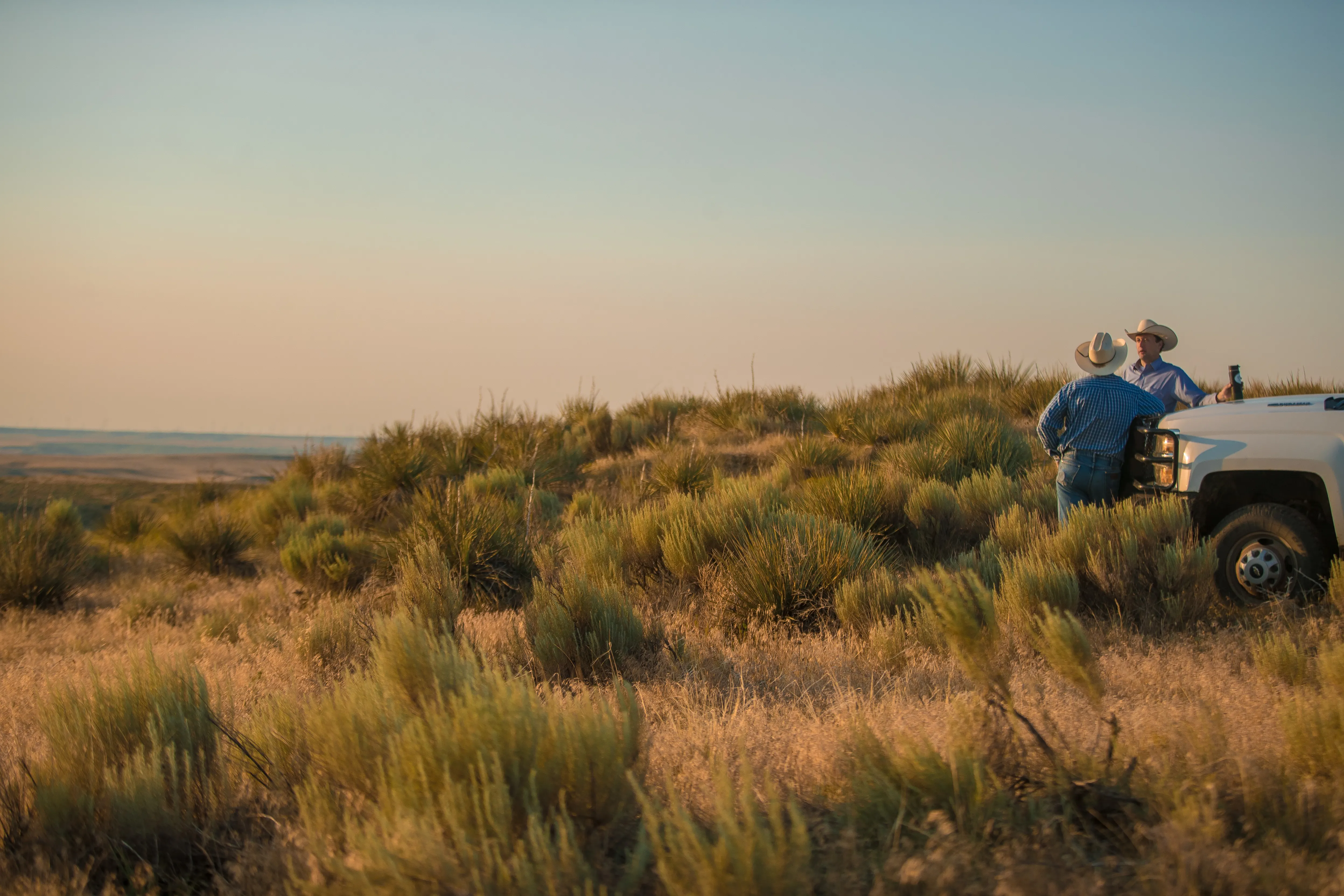
For farmers and ranchers across the country, caring about the land is a way of life.
“I was born and raised in ranching,” says fifth-generation rancher Manuel Murrietta. “It’s important to me to save this way of life. As cities grow, if we don’t keep open spaces in ranching and farming, how will we feed our nation?”
Murrietta pursued a conservation easement for his family’s Pyeatt Ranch with the accredited Arizona Land and Water Trust. Pyeatt Ranch is located just west of Fort Huachuca Sentinel Landscape, a vast stretch of land protected by more than 50 federal, state, local and private partners.
Sentinel landscapes are designated by the Departments of Defense, Agriculture and Interior to buffer high-value military installations, support working agricultural lands and conserve high-priority natural resources. Situated in Arizona’s open rangeland, Fort Huachuca supports the U.S. military through electromagnetic technology testing and training, as well as unmanned aerial vehicle training. Encroaching development threatens to introduce electromagnetic interference.
“The DOD wasn’t an obvious potential partner,” says Michael McDonald, Arizona Land and Water Trust’s former executive director. “But we’ve learned to look for alignment in needs and values. The DOD, the Trust and the landowners we work with all value unfragmented land.”
McDonald describes the Fort Huachuca Sentinel Landscape as a “patchwork quilt” of large federal lands managed by the DOD, Bureau of Land Management and the U.S. Forest Service; state-owned lands; tracts attached to nearby municipalities; and privately owned ranches. Within this patchwork, the Trust holds land conservation easements on private ranch lands that were completed using funding from the DOD Readiness and Environmental Protection Integration (REPI) Program, in addition to more traditional sources such as NRCS easement programs and landowner donations. The Trust also develops land and water conservation plans and facilitates collaboration in the region.
“We’ve built trust over 47 years,” McDonald says. “That allows us to broker conversations and goodwill among partners who are coming from very different perspectives and might mistrust each other.”
“Working with multiple landowners is necessary,” he says. “Migratory animal species and the water running into the San Pedro River move between elevations. Public conserved lands enable urban residents to camp, hunt and hike. Private landowners help preserve vital but diminishing watersheds. Both protect the wide-open viewsheds people love. Public-private initiatives are key to accomplishing it all.”
“The Trust made the conservation easement a great process. With the money, I was able to buy another nearby ranch with an easement already on it,” Murrietta says. “Originally, Pyeatt Ranch was too small to support my family without outside income. Now, it’s big enough to sustain us, and it will stay a ranch forever.”
Murrietta is also participating in a project across Fort Huachuca Sentinel Landscape to remove invasive mesquite trees: “These trees’ deep roots drink lots of water. Removing them will help the groundwater, which will help cattle, humans and the whole ecosystem.”
“In a public-private partnership,” says McDonald, “there’s room for different people to find their specific priority, whether national security, a way of life, water resources or wildlife habitat. The result is the same: We’re helping save this place we call home. That’s why I’m hopeful for the future of public-private partnerships. I encourage all land trusts to look for alignment with unexpected partners.”
Advocacy brings people together
When the Montana state Senate bill to limit the term of conservation easements came up, Van Dyk knew it would be important to mobilize supporters of conservation. The Montana Land Reliance rallied outdoor recreationists, farmers and ranchers, and even timber and other industries who all care about and depend on the land.
“Timber is an important economic sector here, so getting them on board with the importance of perpetual conservation easements as a tool for sustainable forest management was key,” says Van Dyk.
The day before the bill’s Senate hearing, Van Dyk visited the senator who sponsored it. “That evening, I found out he hadn’t received accurate information about how the tools available to his farming and ranching neighbors hinged on perpetuity. He realized this bill wasn’t the way to achieve his top priority: protecting Montana’s agricultural way of life,” Van Dyk says.
The next day, the senator introduced his bill in the Senate—then promptly offered to table it. Dozens of people had come to testify against the bill, and he graciously invited them to speak before the Senate Judiciary Committee as planned.
“The lesson I took from this: We have to get to know people. Not just community members. We can’t forget about legislators when they go home,” says Van Dyk, who participated in the 2025 Land Trust Alliance Advocacy Days two months later. “Because he and I established a relationship, it will be easier to talk with him as issues arise in the future. I believe land trusts that stay in lawmakers’ ears can better help them understand how their constituents’ concerns are tied to the land.”
“Whether your lawmakers are liberal or conservative, we’re going to be most successful by building relationships, not by fighting battles in the moment,” he says. “Over coffee, you can build trust talking about your kids or anything you have in common. You can proactively address misinformation. When the time comes for a bill, they’ll know there’s a critical mass of their friends, neighbors and constituents who really care about conservation.”
Demosthenes wholeheartedly agrees.
“The Land Trust Alliance exists to support organizations as they bring people together for conservation,” says Demosthenes. “We have a proven track record as a community that gets things done.” She cites past successes supporting nonpartisan legislation, like the Farm Bill and the Great American Outdoors Act, as well as securing the permanent conservation tax incentive and the Charitable Conservation Easement Program Integrity Act with bipartisan Congressional support.
"Success is never guaranteed, and it doesn’t come about overnight, but if we continue to stay the course by building trust and cultivating relationships, I think we can feel hopeful,” says Demosthenes. “The results we’ve generated speak to our collective strength as well as the nonpartisan nature of what we work toward. Conservation really is something we all care about.”