Crafting Flexible Easements to Respond to Change
Source

About This Case Study
At Nebraska Land Trust flexible easements further long-term management objectives.
© 2026 Land Trust Alliance, Inc. All rights reserved.
Disclaimer
These resources are provided "as is" for informational purposes only, without warranty of any kind. They do not constitute legal or professional advice and do not create an attorney-client relationship. They may not reflect current legal developments and should be adapted for your organization with qualified professional help. The Alliance is not liable for any damages arising from use of or reliance on these resources. Views in individual posts and third-party links/logos are not Alliance endorsements. The Alliance is committed to equal opportunity and does not condone unlawful discrimination.
For accreditation-related materials, please also consult the Land Trust Accreditation Commission website.
Value of the land and habitat
Since 2001, the Nebraska Land Trust has been dedicated to the mission of protecting agricultural, historical and natural resources throughout the state through education, partnerships and permanent conservation. From hardwood forests on the eastern bluffs to pine covered buttes in the Panhandle, Nebraska is a land of contrast and beauty. In 2010 the Nebraska Game and Parks Commission’s ecological assessment listed 83 natural community types, including upland forests, mixed-grass prairies and various wetland systems. Average temperatures are fairly uniform across the state, with hot summers and generally cold winters. Rainfall can vary significantly between the west and southeast regions.
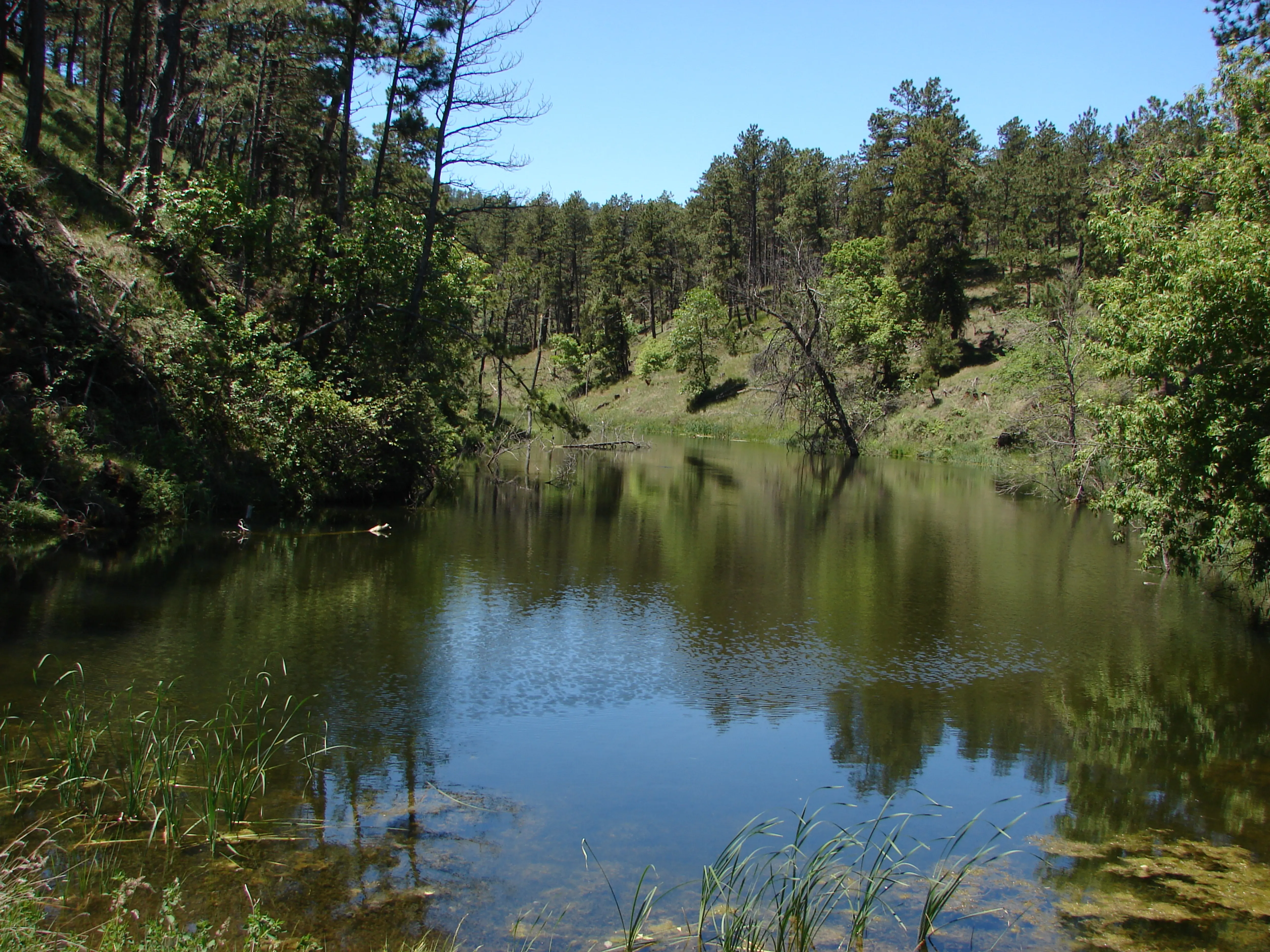
While Nebraska doesn’t have mountains, the Wildcat Hills and Pine Ridge come close. With ponderosa pines, towering buttes, deep canyons, clear streams and expansive grasslands, the Wildcat Hills and Pine Ridge are two of the most popular and scenic destinations in Nebraska. They are also two of the state’s 40 Biologically Unique Landscapes which are designated through the State Wildlife Action Plan as landscapes where conservation should focus. The Pine Ridge and Wildcat Hills are especially diverse, with western and eastern wildlife on the edge of its range.
In northwestern Nebraska, the scenic Pine Ridge region is a rugged landscape of buttes, knife-edged ridges, canyons and grasslands. The area is also rich in history and western wildlife such as elk, antelope, bighorn sheep and songbirds. These attributes make the Pine Ridge a magnet for tourism with the state’s first state park (Chadron SP), largest state park (Fort Robinson SP), the state’s only national forest and its only national grassland. However, even with more public land than elsewhere in the state, the Pine Ridge is still mostly in private hands. Through active range management generations of ranchers have preserved a landscape that would still be recognized by the Native Americans who preceded them.
Conservation concerns
Traditional land ownership and use in the Pine Ridge is changing, from agriculture to recreation and development. Ranching has largely preserved the integrity of grassland ecosystems by preventing fragmentation that maintains wide-open spaces. Unfortunately, ranches are increasingly being sold for recreational use, often to out-of-state buyers. When recreation replaces ranching, there can be immediate impacts to the land and community. For example, if grazing is eliminated completely, fuel loading of grasses, scrub-shrub and “dog hair” stands of forest can turn what once was a healthy prairie system into a tinderbox.
In addition to changing land ownership, changing climate conditions and resource use trends are leading to increasing impacts from drought and wildfire. In 2012 a horrible drought caused the most intense and numerous forest fires ever seen in Nebraska; two conservation properties held by the land trust that were located 200 miles apart had ponderosa pine forest that was decimated. Before that the land trust didn’t think about things like fire breaks.

Since then, NLT has implemented changes in the way easements are constructed in order to reduce risks of future fires, droughts and the spread of invasive species. These changes include allowing for fuel load reduction through selective tree thinning and grazing activities and control of invasive species. Additionally, implementation of a land management plan is a consideration for conservation prioritization in NLT’s “Property Scoring Worksheet”. The worksheet specifies that “land management plans are adaptive, written documents that may change according to conditions” and may include grazing, farming, fuels management, sustainable forestry, wildlife habitat and water resources. By allowing for flexible land management and considering comprehensive planning when selecting conservation properties, NLT is taking an adaptive approach to long-term resource stewardship.
Current protection status and management plan
In addition to encouraging sustainable agriculture and forestry practices, the Nebraska Land Trust supports community land management education. The land trust’s resources page refers landowners to local and federal resources as well as experts on a variety of topics such as prescribed fire, invasive species control, drought management and rangeland preservation. For interested landowners, the land trust also supports the pursuit of grant opportunities and cost-share programs that enable these efforts.
While the Nebraska Land Trust’s mission entails state-wide conservation, it is targeting conservation easement acquisition in especially iconic and ecological unique regions of Nebraska. In 2014 NLT launched the “Pines and Buttes Preservation Project,” supported by a grant from the Nebraska Environmental Trust, which receives 44.5% of the state’s lottery proceeds that are disbursed through highly competitive grants. Through designation of the Pine Ridge Advisory Committee, the NLT Board of Directors recognizes the Pine Ridge as a part of the Pines and Buttes Conservation Focus Area (CFA) which may also include the Wildcat Hills. The CFA designation gives projects in that landscape a high priority, especially when the NLT pursues limited state and/or federal funding needed to purchase an easement. Community input is essential to the success of a CFA. To assure selection of quality, locally supported easements, advisory committees in both landscapes are helping to guide the selection of priority projects through transparent, locally relevant conservation criteria.
Process of achieving protection and resilience to climate change
The Pines and Buttes Preservation Project is a three-year funded initiative that aims to purchase multiple conservation easements in the Pine Ridge and Wildcat Hills regions. In October 2015, the NLT assessed four properties in the Pine ridge totaling 4,400 acres. The highest scoring property was one where active forest thinning and grazing had shielded their land from the devastating 2012 wildfires. Whereas properties around them had burned, this property is a living example that properly managed forests can be more resilient when wildfire strikes and in the aftermath, they can act as “seed islands” that will aid in the regeneration of the pine forests over time. In addition to allowing for such management in the conservation easement, the NLT will go one step further and help to seek cost-shares for landowners interested in proactive forest management. The pace of conservation will depend on funding, but through the NLT’s scoring process, “seed islands” that constitute the best managed, most fire resistant forests will become priorities for protection.
Engaging stakeholders

Nebraska Land Trust
Location: Nebraska
Nebraska Land Trust was established in 2001 and has protected 14,940 acres. The organization has two staff members plus in-kind services, from biology to archeology and mapping, from various organizations that serve on the Board of Directors, as well as 100 supporters.
Fisher Ranch Conservation Easement
546 acres of ranch conservation easement adjacent to the 3,659 acre Ponderosa Wildlife Management Area and the Nebraska National Forest
Mixed forest
Buttes
Meadows
Wetland, riparian and aquatic habitat
Migration corridor for bighorn sheep and elk
Songbirds
Not open to the public
The Fisher Ranch is a prime example of the importance of fire-wise management practices. Sadly the ranch burned in 2012, however, flexible easement language enables restoration and enhancement activities to improve habitat as well as reduce erosion and long-term fire risk on this recovering property.