Counting what matters
Source
Author

About This Saving Land
Results from the nation's longest-running survey of private land conservation are in. The numbers, and the stories of individual land trusts, show the collective impact of land trusts across the country to protect land and address the needs of their communities.
© 2026 Land Trust Alliance, Inc. All rights reserved.
Disclaimer
These resources are provided "as is" for informational purposes only, without warranty of any kind. They do not constitute legal or professional advice and do not create an attorney-client relationship. They may not reflect current legal developments and should be adapted for your organization with qualified professional help. The Alliance is not liable for any damages arising from use of or reliance on these resources. Views in individual posts and third-party links/logos are not Alliance endorsements. The Alliance is committed to equal opportunity and does not condone unlawful discrimination.
For accreditation-related materials, please also consult the Land Trust Accreditation Commission website.
You may have heard the saying, “No numbers without stories and no stories without numbers.” Since 1981, that sound piece of communications advice has been a guiding principle behind the National Land Trust Census, the nation’s longest-running survey of private land conservation. Every five years, the Land Trust Alliance queries its members for key metrics about their work, including staffing levels, acres protected, types of land protected and community engagement. Some 565 land trusts responded to the 2020 Census, providing a window into a growing conservation movement that is well-established, yet adapting in the face of profound ecological and social change.
The raw numbers are impressive — 61 million acres protected (more than all national parks combined) and 16.7 million visitors to land trust properties in 2020. Dive deeper and you sense a rising tidal wave of change — land trusts across the nation are harnessing the power of conservation to address the social challenges of their communities, from inequity to health problems to disaster preparedness.
“The 2020 Census shows that land trusts big and small are increasing their community work — through partnerships, engagement and outreach — and increasing their focus on climate change,” says Katie Chang, senior manager of Educational Services at the Alliance.
This shift does not come at the expense of land protection, but rather in tandem with it, and it isn’t limited to large national and regional conservation groups. In fact, local land trusts are leading the way forward — 70% of the growth in land protected since 2015 was achieved by local and state land trusts.
Every land trust is as unique as the community it serves, and their stories — at least one for every acre saved — make a compelling case for private land conservation and for land trusts as enduring, committed community institutions. No matter how you look at it, the land trust community is gaining ground and is well-equipped to achieve the 30x30 goal. Protecting land and connecting people to nature has never been more necessary or more powerful.

Bringing conservation to the playground
There’s an expression among conservation professionals that “asphalt is always the last crop.” Once an ecosystem gets plowed under and the very topsoil scraped off and trucked away, that’s true enough.
Except the opposite holds true at 30 public schools in Chicago. There, playgrounds once entombed in asphalt and cement have been reclaimed as park space. This ruin-to-recovery project is co-managed by Healthy Schools and Openlands, a Chicago-based land trust. Openlands protects wild land, ensures water quality and advocates for the environment across 17 counties in Illinois, Wisconsin and Indiana.
For some, rebuilding urban playgrounds may sound like more of a “parks and rec” move than something a land trust would do. But, as the 2020 Census revealed, land trusts are actively creating partnerships with community groups — 80% partner with youth development and education groups. Openlands’ involvement speaks to the power of these community partnerships, which can greatly amplify the resources and clout that today’s conservation efforts need to succeed.
“Our main driver is to connect people with nature wherever they live,” says Daniella Pereira, vice president of community conservation at Openlands. “We help people to access green space, and if that’s not available then we work with a community’s vision to re-green their neighborhood.”
The Space to Grow schoolyards began in 2014, under the auspices of the Healthy Schools Campaign and Openlands. Capital support comes from Chicago Public Schools, the Chicago Department of Water Management and the Metropolitan Water Reclamation District of Chicago. To qualify, a school must have at least 30,000 square feet of hard surface playground that they want to demolish, places where “kids didn’t even want to go outside because there was no place to sit or be alone. The research shows that there’s more bullying in places like that,” says Pereira. When complete, the resurrected playgrounds include trees, native plants, rain gardens and outdoor learning labs. Most also have tracks and sports fields, clad in permeable surfaces.
But what makes Space to Grow schoolyards far more complex (and expensive) than a typical playground is what lies beneath: a deep gravel substrate that’s engineered to absorb thousands of gallons of rainwater and storm runoff. Essentially, the schoolyards function like an infrastructure layer cake with an icing of recreational amenities on top.
What drives the partnership is a commitment by Chicago water agencies to better manage the city’s chronic rainwater runoff problem. They’re relying on the sponge-like qualities of green schoolyards to help reduce the combined sewage overflows that occur when excess stormwater mixes in the same sewer pipes with untreated waste and spills into local waters, such as Lake Michigan. The $1.5 million price tag for each Space to Grow schoolyard comes from Chicago Public Schools and water agency capital funds. As part of its schoolyard siting criteria, Space to Grow selects low-income neighborhoods that are prone to flooding. It’s a problem made worse by the heavy rains associated with climate change.
6.4 million people participated in land trust programs and activities in 2020.
From the outset, local residents have ample say about their schoolyard’s design and operation. “We don’t start with a prototype,” says Meg Kelly, Space to Grow director. “The community gets a chance to do scenario planning and our designers put together two concept plans. We want the end product to be what our partners want.”
Nonetheless, each schoolyard must meet two conditions: First, provide play equipment and outdoor classrooms; and second, remain open after school and on weekends. “The first time you lock a schoolyard gate, you’re telling someone they’re not welcome,” Kelly says. “We don’t want to send that message. Instead of locking gates, it’s best when our partners actively use schoolyards for things like ballgames or yoga. With regular activity, we have fewer problems.”
The community-driven message also extends to maintenance, which is done by residents with barriers to employment, trained in horticulture by A Safe Haven, a Chicago nonprofit. Once the schoolyards are built, the work changes focus to providing trainings for teachers, parents and community members to maximize use of the new space. From food to art to nature studies, they want to see the schoolyards become a hub of health, equity and hope. This, in neighborhoods of color where school investments have long lagged behind those in white neighborhoods.
“We just started doing ribbon cuttings for new schoolyards,” Pereira says. “And I’ve had neighbors come by and say, ‘This is so beautiful! If this is where my tax dollars are going, then I’m all for it.’”
Blazing trails for community conservation
There’s a simple, but powerful way for land trusts to get closer to the people they serve: Ask them to take a walk with you.
“It’s amazing — when you walk with someone, you get to know each other in a different way,” says Sarah Noss, executive director of the Santa Fe Conservation Trust (SFCT). “There’s a big push around community conservation and this has broadened our constituency and opened more funding opportunities.”
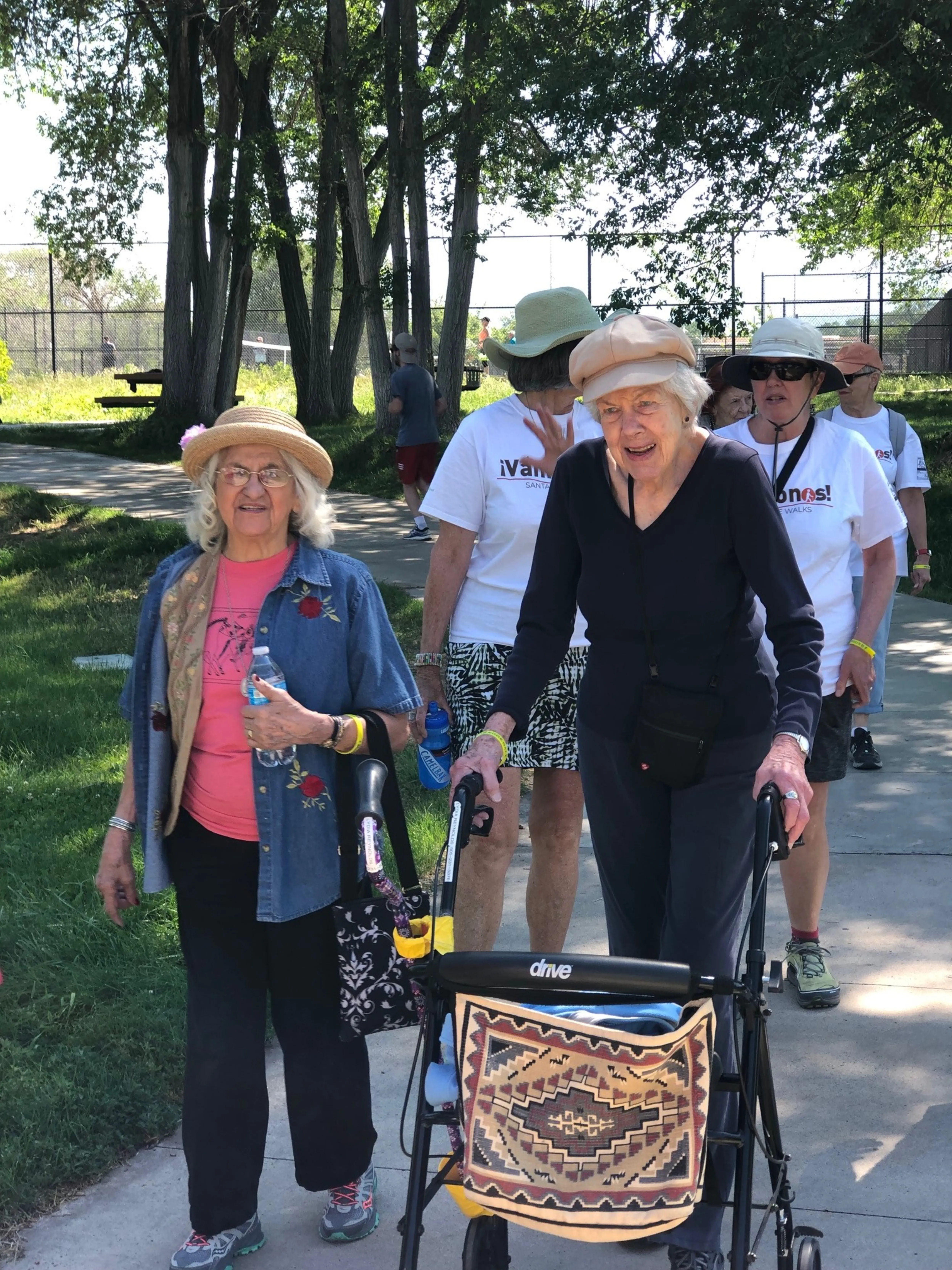
What’s made such foot-powered positivity possible has been a free urban walking program known as Vámonos (“let’s go” in Spanish). SFCT staff and volunteers lead 23 scheduled walks from May to October, mainly on ADA-certified trails near Santa Fe parks. The 2-3 mile walks, which last about one hour, are held weekdays at 5:30 or 6 p.m. and Saturdays at 10 a.m. Typically, 10-20 walkers turn out for each session, with 393 total participants in 2021.
The city’s well-regarded trail network spans 75 miles and SFCT has long been involved with its development. There’s even a 35-mile loop named for Dale Bale, SFCT’s first executive director. “Some people find it interesting that we have a strong trails program,” Noss says. “They say, ‘Are you a land trust or a trails program?’ We’re both.”
SFCT also convenes the Santa Fe Walking Collaborative, whose members support Vámonos events. They include the City of Santa Fe Parks and Recreation Department, New Mexico Department of Health, City of Santa Fe Senior Services Division and La Familia Medical Center.
While trails on land trust preserves may evoke images of serious birder types and lug-soled power walkers, that’s not the Vámonos way.
“Dirt trails are great if you’re fit and live near one,” Noss says. “But there are people who don’t like to walk alone because they’re afraid … or don’t even know the trails exist.”
Vámonos hikers are a varied lot in terms of age, ability and socioeconomic background. You’ll see elderly hikers bused in from nearby retirement homes. You’ll see “bigs” hiking with their “littles” as part of a Big Brothers Big Sisters mentor outing. During hikes in southwest Santa Fe, you’ll see a higher number of Spanish-speaking families.
On Saturday mornings, more kids and adults come out for nature scavenger hikes. They’ll slow down long enough to sniff the caramel scent of Ponderosa pine bark, and learn the difference between a piñon pine and a juniper. To the fascination of some — and horror of others — they might even find their first desert tarantula.
SFCT’s outreach reflects a growing trend that surfaced in the 2020 Census: 76% of land trusts have increased community engagement since 2015. Likewise, 78% are engaging groups historically underrepresented in conservation, including people of diverse racial and ethnic backgrounds, older adults, veterans or active-duty military, people living with disabilities and LGBTQ+ individuals.
76% of land trusts have increased their focus on community engagement since 2015.
“It’s meaningful to take an older person into nature if only to walk 20 feet and sit on a bench,” Noss says. “One example is a man with an inner-ear problem who needs us to hold his arm when he walks. He wouldn’t be out here except for Vámonos.”
For all the good that Vámonos does for residents, it’s also been good for SFCT. While it costs around $7,000 in staff time to run the program, SFCT has leveraged $25,000-30,000 per year in related funding. Recently, its track record with urban trails helped SFCT to land a federal grant through the Safe Routes to Schools program. Similar to Vámonos, it will encourage more children to bike and walk to school.
Vámonos walkers have also started to attend other SFCT events, which doesn’t surprise Noss. She says that “fun experiences where people just hang out with us” builds connections in ways that simply touting how many acres they’ve protected cannot.
“This isn’t ‘mission drift’ for us,” Noss says. “It’s about finding where the unmet needs of people and nature intersect. The chances of us surviving long term are challenging unless we engage more deeply with the community.”

Dampening the flames of climate change
On October 14, when the first autumn snow dusted the streets and mountains around Moscow, Idaho, Lovina Englund did more than enjoy the frosty ambience. After months of perilous heat, lingering smoke and anxious days when every kiln-dry tree felt prone to catastrophe, she breathed a deep sigh of relief. The fire season was finally over.
“Out here, everything is so exacerbated by climate change,” says Englund, executive director of the Palouse Land Trust (PLT). “Between the fuel buildup (in forests) and the drought, we’re constantly barraged by more severe fires that require more resources. We usually have seven to 10 days of extreme weather conditions, but this year it went on for weeks and weeks.”
This includes the heat dome event in July, a lethal weather phenomenon that Englund describes as “eye-poppingly scary.” It drove temperatures in Idaho to 95 degrees or higher for 20 straight days, a new state record.
Into this breach steps PLT and other land trusts like it in the Mountain West. Along with its usual work to save land, restore habitat and promote access to nature, PLT has become what the military calls a force multiplier. They have no heavy trucks, no legions of firefighters, no aircraft to rain tons of red fire retardant on smoldering forests. What they can do, however, is leverage the powerful tools of knowledge and prevention to stop fires from starting in the first place.
“This is an evolution of our programming,” Englund says. “We collaborate with landowners around fuel prevention and how to prepare for the fire season. We know it’s not if the fire is coming but when.”
With a staff of three, PLT covers a 12 million-acre service area in north-central Idaho and southeast Washington. The diverse topography includes federal wilderness, the loess soil wheatlands of the Palouse prairie and canyons along the Snake River. Setting clear priorities and building partnerships around stewardship has long been crucial to PLT’s success. Now, faced with the dire exigency of an extended fire season, PLT’s public engagement takes on new urgency. Their partners include Idaho Firewise, AmeriCorps and the fire ecology program at the University of Idaho (UI) campus in Moscow. This combined effort puts PLT among the 74% of land trusts that increased their focus on climate change in the last five years, according to the 2020 Census.
Much of PLT’s landowner outreach targets the “wildland-urban interface.” These are places where structures built close to forests create inherent fire hazards for homeowners. PLT’s guidance here focuses on the practical: don’t use cedar shakes as shingles or siding; keep pine needles out of rain gutters; trim low hanging limbs from trees and remove excess woody debris from the ground.
74% of land trusts have increased their focus on climate change since 2015.
In August, PLT’s prevention measures — part science, part neighborly cohesion — were severely tested. It started with a faulty battery charger that set a barn on fire near the Stage Easement, an 81-acre PLT preserve. When a local farmer saw smoke, he jumped on his tractor and began to disc a firebreak to contain the flames. Meanwhile, landowners directed firefighting helicopters to fill their “Bambi buckets” with water from irrigation ponds. The fired destroyed the barn and a home that belonged to a PLT board member. Yet without a fuel reduction project carried out earlier by UI students and faculty, the fire could’ve been disastrous. They had thinned overstocked trees, removed dead trunks and cleared low-level “ladder fuels” that can carry flames into the overhead canopy.
“Their work was our saving grace,” says Jaime Jovanovich-Walker, PLT communications and development coordinator. “If they hadn’t done what they did, the fire would’ve spread to the Moscow Mountain corridor. Instead of 116 acres, it would’ve burned hundreds of thousands.”
Despite a 35-mph wind, the Stage fire singed trees but did little heavy damage. PLT staff consider it a “miracle” that the fire switched course and didn’t spread to their beloved Idler’s Rest preserve nearby. Still, PLT isn’t counting on fate to protect the people and wild places of the Palouse.
“Now, the reality of being a Westerner involves living differently during the fire season,” Englund says. “We can’t always rely on firefighters to be heroes and save us. But a land trust can leverage its prevention resources in ways that have a meaningful impact.”
Working big, while staying small
It doesn’t take a big land trust to be a great land trust. By “playing above their weight” small land trusts can achieve conservation gains that rival those with more staff and deeper pockets. The 72% of land trusts that operate with three or fewer full-time staff achieve more with less on a daily basis.
And that especially holds true in underserved places like the Pelican State.
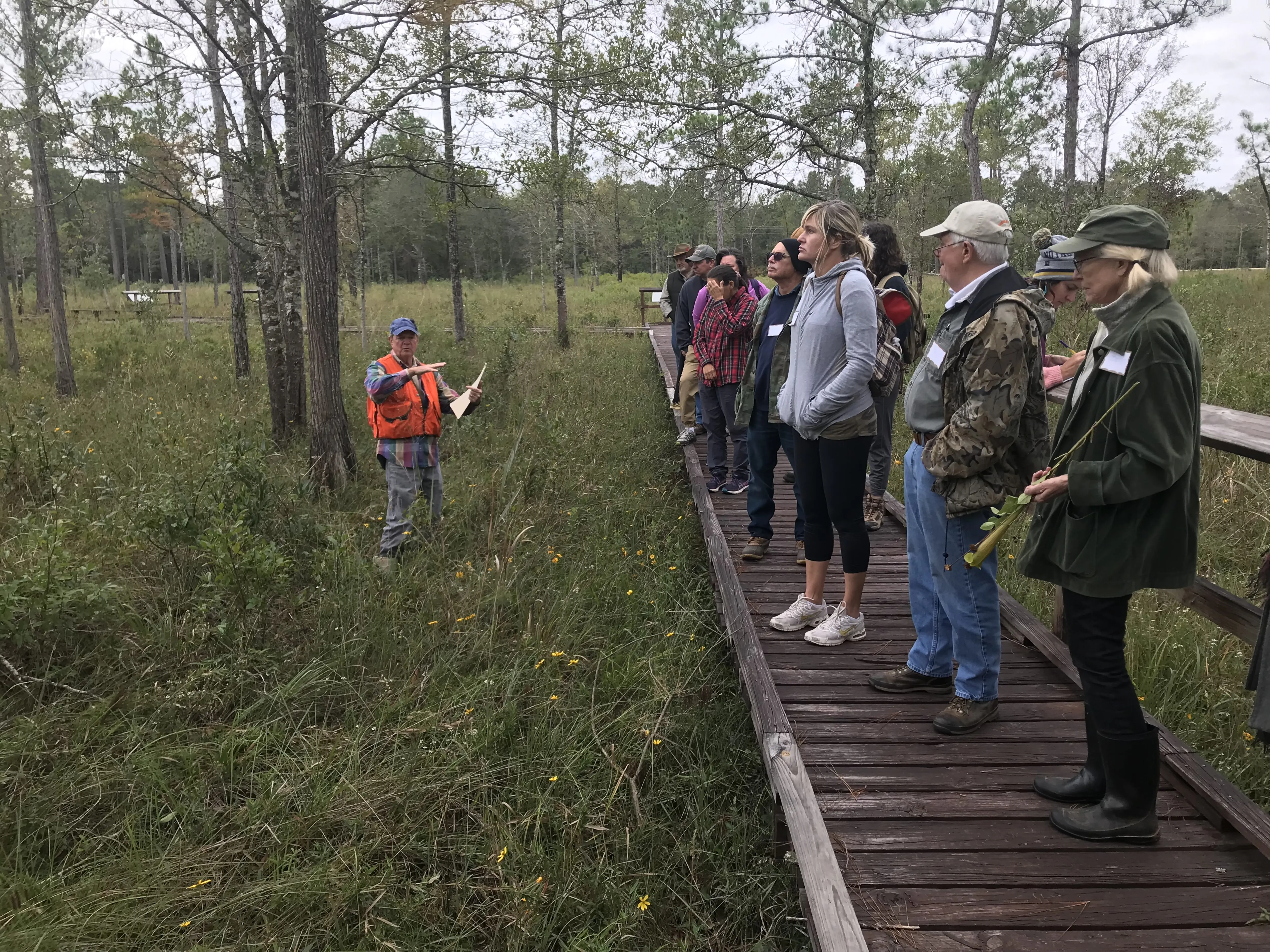
“We are, quite literally, the only statewide accredited locally-based land trust in Louisiana,” says Cindy Brown, executive director of the Land Trust for Louisiana (LTL). “We fill a really important niche, but because we’re small and nimble we take on a lot. We get thrown a lot of projects by groups like Ducks Unlimited and The Nature Conservancy.”
Size hasn’t been — and shouldn’t be — a deal breaker for land trusts. Taken together, local land trusts have a big collective impact. As revealed by the 2020 Census, 70% of the acreage protected since 2015 was achieved by state and local land trusts — not big national groups. Still, Brown says it’s even more important for small land trusts to stay focused, efficient and responsive as they pursue their mission.
For starters, when small land trusts are eager for growth, it’s easy for them to accept land for preserves that’s most available and affordable, or accept a marginal property from a well-intended donor that becomes a headache later. (Sometimes, the best land deals are the ones that land trusts don’t make.) Likewise, Brown says some of LTL’s early projects wouldn’t fit their criteria today. Instead of being opportunity driven they’ve become “more proactive in matching opportunities to community needs.” This includes targeting preserves that offer floodwater retention or protecting rice farms that benefit wildlife, feed local economies and preserve cultural traditions.
Mitigation preserves are one way a small land trust like LTL has been able to grow. When corporations or governments damage natural areas, such as wetlands, they’re required by law to restore or purchase similar lands elsewhere to mitigate that loss. Rebuilding these areas can pay dividends in perpetuity, just as other land trust holdings do. LTL receives management fees for the easements they hold on seven mitigation properties that total more than 6,000 acres of wetlands, floodplains, bottomland hardwood forest and longleaf pine savanna. “I kind of wondered at first about the practice of mitigation,” Brown says. “But I’ve come to realize that these will become some of the state’s highest quality wild properties.”
70% of the growth in land protected since 2015 was achieved by local and state land trusts.
It’s not always easy for small land trusts to get the attention and credibility they deserve, but here they can benefit from a mark of distinction that’s like the land trust version of the “S” on Superman’s cape: the infinity symbol that shows they’re an accredited land trust. To received accreditation, land trusts undertake a thorough review of their practices in governance, finance, transactions and stewardship. Of the nation’s 1,363 trusts, 453 are accredited—including each of the land trusts featured in this story — and they protect 81% of land and easements held by all land trusts.
LTL became an accredited land trust in 2015, before Brown arrived. “It was tough, I’ve heard the war stories,” she says. “But it’s hugely important to say we’ve passed these incredibly rigorous standards to receive accreditation.” And, it’s this process itself that proves invaluable. It requires land trusts to take stock, fill operational gaps and plan wisely to achieve what the infinity icon promises: to protect land in perpetuity.
As a “small and nimble” land trust, LTL has learned to readily focus on emergent needs. Consider the cluster of pushpins that hover over St. Tammany Parish on LTL’s statewide property map. They represent five LTL properties on the vulnerable North Shore of Lake Pontchartrain in New Orleans. The North Shore has increasingly become a refuge for residents who build homes there to flee hurricanes that batter the Gulf Coast. These lush lands upstream from Lake Pontchartrain can provide much-needed flood storage and storm surge protection, but only if left undeveloped.
Now, LTL has become a key conservation partner in this fast-growing region. “The coast is moving and there’s no doubt that the North Shore will become our new coast at some point,” Brown says. “We have to build in enough natural resiliency to help plug the holes.”
Tom Springer has served in several roles for the accredited Southwest Michigan Land Conservancy, including board member, volunteer and writer.