Land trusts are stepping up to tackle issues like climate change, water quality
Accreditation is awarded to land trusts meeting the highest national standards for excellence and conservation permanence, and these land trusts are now addressing major environmental concerns in their communities.

Land trusts are leaders in tackling daunting, large-scale challenges such as climate change and water quality. Accreditation helps land trusts work more effectively by positioning them to be sound partners, raising their credibility in their communities and ensuring the highest standards when using conservation-based solutions.
“Maybe some land trusts think, ‘How can we offset climate change, we’re just a land trust and this is a global issue?’” said Seth McKee, executive director of The Scenic Hudson Land Trust in New York’s Hudson Valley. “At Scenic Hudson we have always felt that there were things we could do to help our region adapt to and mitigate the effects of climate change.”
Because the Hudson River is tidal, its riverfront lands are vulnerable to rising sea levels. Scenic Hudson, first accredited in 2008, began making climate change a priority in the mid-2000s. It implements adaptation strategies by identifying priority land parcels that leverage conservation land to create protective pathways and foster landscape connectivity. These connections safeguard the ability of tidal wetlands to shift to higher ground and wildlife to migrate upland and northward on safe pathways.
Scenic Hudson’s strategies also include making recreational areas along the river adaptable to periodic flooding, conserving forest carbon and creating incentives for farmers to use climate-resilient and regenerative practices.
“Accreditation has positively impacted how we are able to work on climate change issues,” said McKee. “We strive to be credible and create models that are replicable, adaptable and sustainable over time. Being accredited holds a mirror up to us to help assure that the projects we choose are truly aligned with our priorities and strategic plan and to turn away ones that are not. Indirectly, accreditation supports the infrastructure to make these decisions.”
Tackling Water Quality
Accreditation helps RiverLink, based in Asheville, North Carolina, address an important environmental concern in the community — water quality.
“Being an accredited land trust ensures we are holding ourselves to the highest standards of land stewardship and ultimate water quality protection, all with the goal of a thriving, healthy French Broad River watershed,” said Lisa Raleigh, executive director of RiverLink, first accredited in 2015.
The French Broad is one of the oldest rivers in the world, dating anywhere from 260-325 million years old, and is fed by over 4,000 miles of streams and lesser rivers. But years of industrial and agricultural pollutants, sewage contamination and sediment pollution led American writer Wilma Dykeman to describe the river as “too thick to drink, too thin to plow” in her 1955 book “The French Broad.”
Environmental education, watershed management and land conservation are all tools used by RiverLink to promote the environmental and economic vitality of the French Broad River and its watershed.
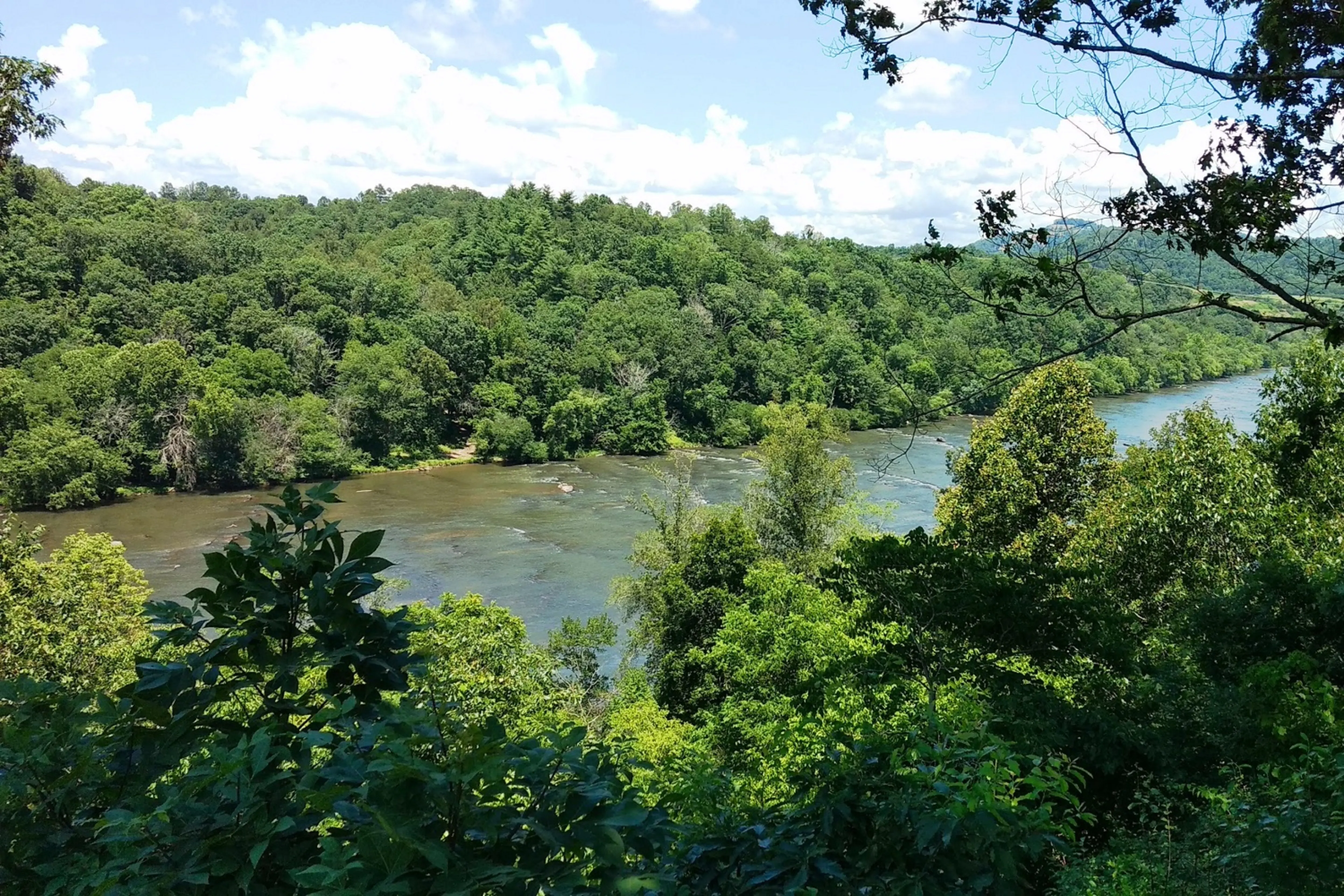
A major priority is placing conservation easements on areas close to the waterways, especially in urban and semi-urban locations that are at high risk of impact from development.
“RiverLink’s conservation focus is on the land adjacent to rivers and streams,” explained Raleigh. “The soil and vegetation in these buffer lands are key to filtering harmful runoff from urban and suburban developments. We seek landowners willing to voluntarily protect these areas so that future generations will enjoy abundant, clean water and recreation opportunities.”
Go in-depth on accreditation in the article “Stepping Up” in the Spring 2023 issue of Saving Land magazine. Learn more about the Land Trust Accreditation Commission here.