Land trusts are responding to clean water concerns
August is National Water Quality Month, and land trusts like Vermont Land Trust are perfectly positioned to lead high-profile water quality initiatives that are critically important to the communities where they work.
Polluted drinking water remains Americans’ top environmental concern. Over the course of more than two decades, the polling firm Gallup has consistently found that Americans worry more about the pollution of drinking water than other environmental concerns. Gallup’s most recent poll, released earlier this year, found that 55% of Americans carry “a great deal of worry” about the pollution of U.S. drinking water, and a comparable number carry similar concerns for the health of our rivers, lakes and other waterways.
August is National Water Quality Month, and freshwater pollution can be attributed to many things, but two important sources are agricultural runoff and the chemicals and waste from both industrial and residential development. There is an intimate connection between what happens on our land and the health of the water that flows from it, making August the perfect month to explore the link between land and water protection and why land trusts are perfectly positioned to lead high-profile water quality initiatives that are critically important to communities where they work.
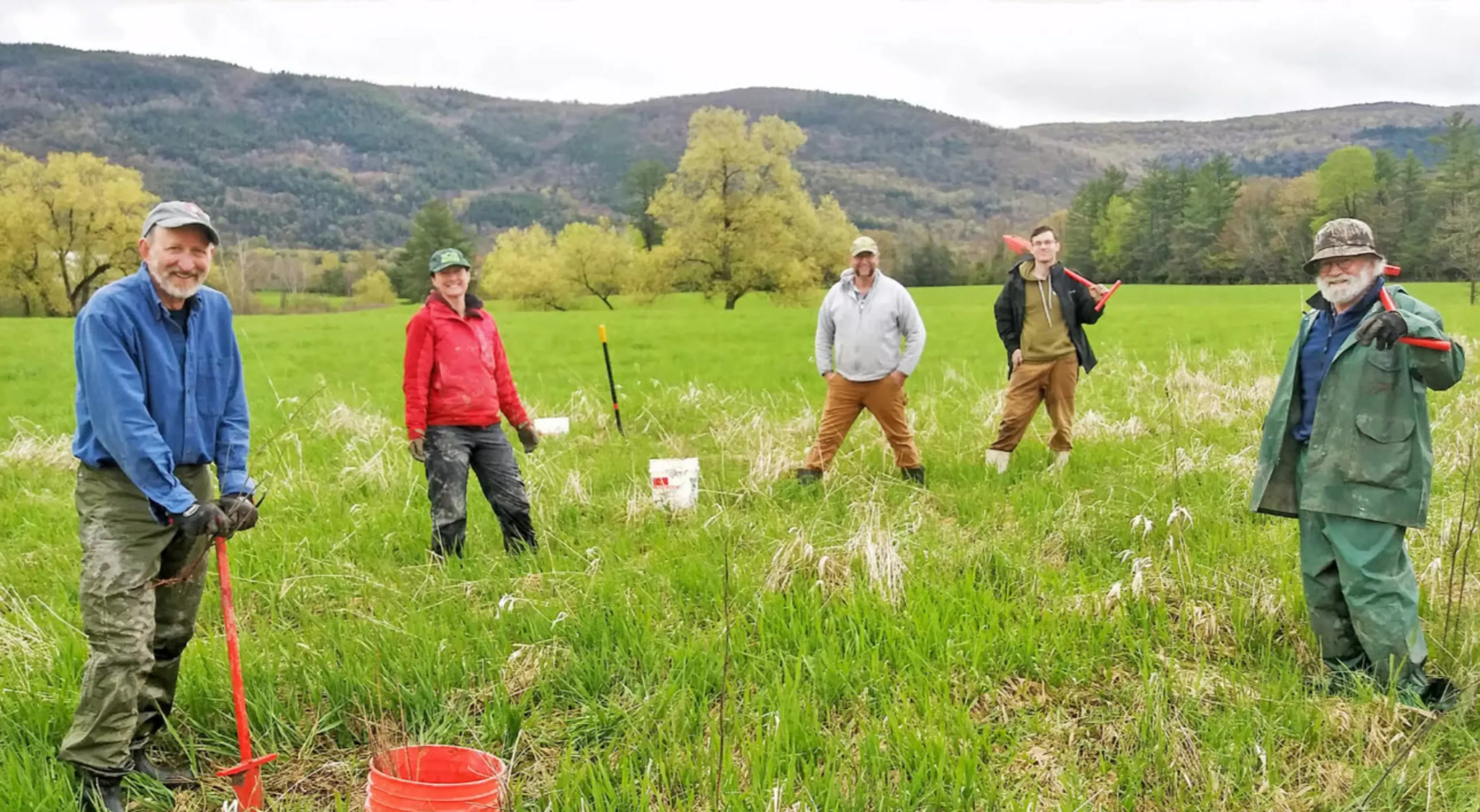
This summer, the Vermont Land Trust worked with partners like the Franklin County Natural Resources Conservation District, Audubon Vermont, Partners for Fish and Wildlife and the Lewis Creek Association to plant 5,500 trees and shrubs in local watersheds hit hard by July storms.
The plantings will help restore streams and reduce flood damage, improve water quality and improve wildlife habitat.
“Rivers and streams need healthy floodplains — the wide, meandering areas around them that fill with water when there are weather events like the ones we experienced this month,” said Allaire Diamond, an ecologist with the Vermont Land Trust. “Re-foresting those spaces not only slows and holds water, it also traps flood-borne material and absorbs nutrients, resulting in cleaner water downstream.”
The Vermont Land Trust-conserved Boneyard Farm — which produces meat, eggs and vegetables — received 3,500 trees and shrubs along a tributary of the Lamoille River. In total, the accredited land trust has conserved more than 150,000 acres of open farmland and works to help farmers become environmental stewards and improve water quality through tree plantings and wetlands restoration, and also by helping them to enroll in programs that promote water and soil health.
“Improving biodiversity on farms by planting trees meets many of our collective goals,” said Lauren Weston, district manager with the Franklin County Natural Resources Conservation District. “It has a ripple effect on our streams, soils, plants, wildlife and food systems. We can all be part of ecologically restorative solutions on the working landscape.”
Local landowners and farmers are hopeful that the vegetation planted along local waterways will help keep the county watersheds healthy and vibrant for years to come.
Learn more about how Vermont Land Trust is working to protect water here.