'Old West' meets 'New West': A Q&A with author Donna Erickson
Erickson's new book, "Rooted at the Edge: Ranching Where the Old West and New West Collide," paints a portrait of a ranching community steeped in history, conflict and beauty.
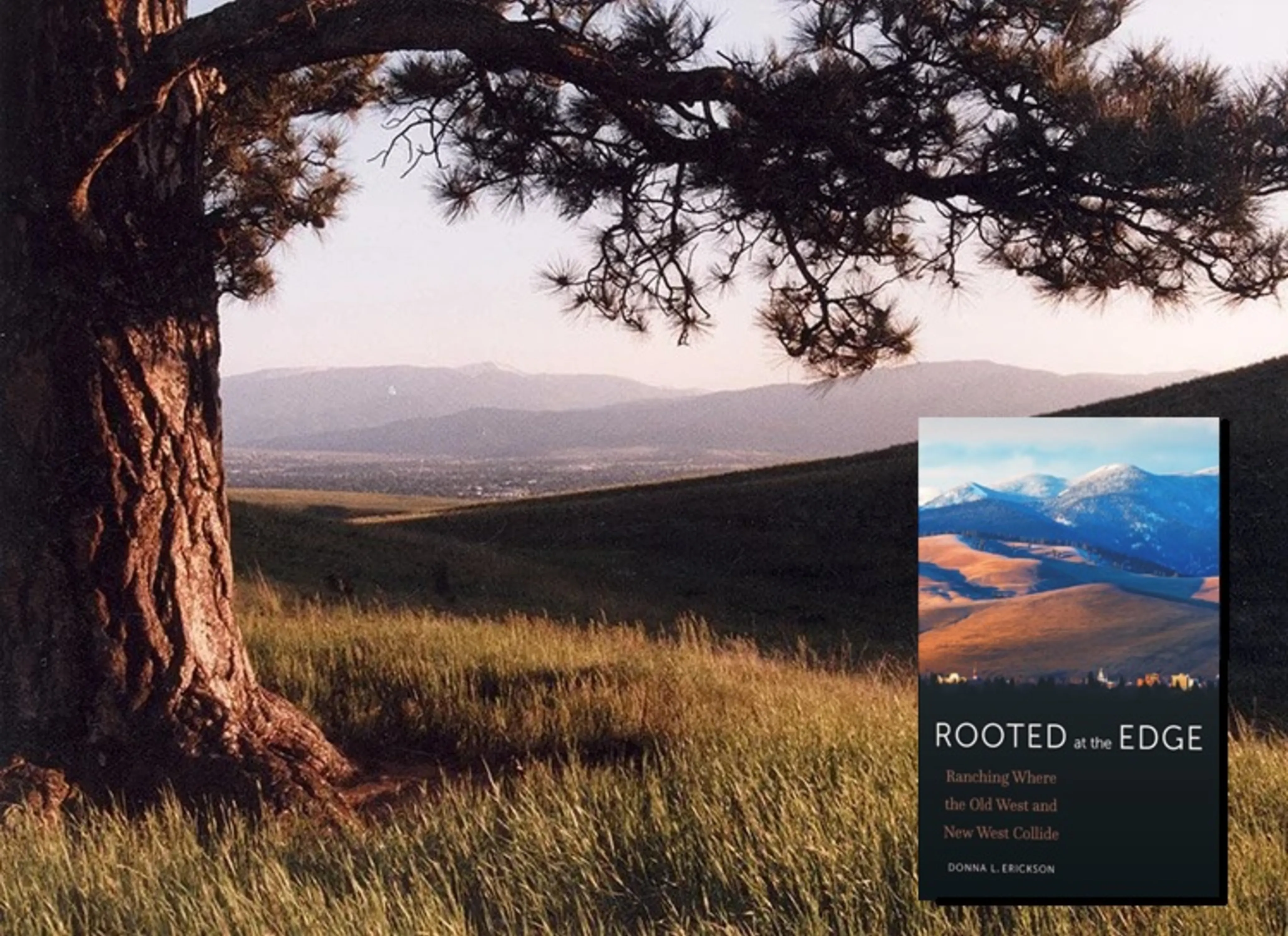
Author Donna Erickson is a founding board member of Legacy Land Conservancy and has consulted on a range of projects with Five Valleys Land Trust in Missoula and dozens of other western land trusts. Her new book, “Rooted at the Edge: Ranching Where the Old West and New West Collide,” explores the intersection of traditional ranching and modern development in the American West.
Land Trust Alliance: Donna, before we get into the book, can you tell us a little bit about your own background and the path that led you to becoming an author?
Donna Erickson: I was raised on a ranch in Missoula, Montana’s North Hills. That region is the focus of my new book. I studied landscape planning while completing a graduate degree at a Dutch university. Following that, much of my career was spent in academia, where I taught and conducted research on changing rural landscapes. After leaving the ‘publish or perish’ world and returning to Missoula, I worked as a consultant with land trusts across a dozen western states. Looking back, I realized that my professional path was rooted in the ranching landscape I’d known as a child and young adult. I wanted to share my experiences and perceptions of that place. And I found that the issues faced by North Hills ranchers are repeated across the West.
Alliance: Over the years, especially through your work as a consultant, you’ve gotten to work quite closely with land trusts. Can you talk a little bit about that work and the relationships you’ve made?
Ms. Erickson: I was a founding board member of a Southeastern Michigan land trust, now Legacy Land Conservancy, during my years at the University of Michigan. I had a strong affinity for the conservation mission of land trusts while witnessing rampant suburban sprawl across irreplaceable farmlands. I was fortunate to consult with Five Valleys Land Trust, starting in 2005, after returning to Missoula. That original project, preparatory work for a county-wide open-space bond measure, led to a range of projects with Five Valleys and then similar work with dozens of western land trusts. My consulting included accreditation applications, strategic planning, conservation planning and policy development. I truly value the many relationships I cultivated and was amazed at the diverse backgrounds that land trust leaders bring to the work. I never tire of hearing of the conservation successes of these organizations.
Alliance: Now to the new book. I believe that “Rooted at the Edge: Ranching Where the Old West and New West Collide” is your second book (after 2006’s “MetroGreen: Connecting Open Space in North American Cities”). We’ll have the full summary for folks at the end of this article, but can you give us a 1-2 sentence synopsis on what the book is about?
Ms. Erickson: “Rooted at the Edge” paints a portrait of a ranching landscape steeped in history, conflict and beauty. In this narrative nonfiction work, I explore the hilly skirt of ground at the northern boundary of Missoula, separating the town from the Rattlesnake Wilderness beyond. The North Hills region represents the critical — and often highly personal — issues at play at the edge of many western towns.

Alliance: On the book’s website, it notes the “century of change” that has transformed an iconic landscape in western Montana. And it’s also true that statistics about development and the loss of ranches at the urban fringe cannot fully convey all that is lost. So…what is it that we’ve lost that the statistics don’t show, and can you talk more about the values and perceptions of ranchers and their urban neighbors and how they differ?
Ms. Erickson: Over the past century, generations of ranch families have, of course, evolved with cultural, technological, political and economic shifts. Statistics do not show people’s deep attachment to the land and how rootedness affects decision-making and life choices. Development pressure causes ways of life and ways of work on ranchlands to transform or even disappear. While the values of ranchers who remain on lands near town remain embedded in ‘what comes off the land’ — beef, produce, eggs — urban neighbors are often more concerned about ‘what stays on the land’ — scenery, habitat, recreational opportunity. This disconnect needs to be recognized if land trusts wish to work with willing landowners toward conservation goals.
Alliance: Ranchers face challenges that most people are unaware of. You’ve mentioned a bit about those challenges; what other challenges have ranchers faced in the North Hills?
Ms. Erickson: North Hills ranchers, like landowners in many places, are impacted by high property taxes, succession issues, high land values, aging owners and low commodity prices. Land trusts across the country work with landowners who face these forces. In addition, ranchers next door to urban neighborhoods often struggle with inappropriate and even illegal behavior at their fence lines. Infractions include trespass, garbage-dumping, illegal hunting, human-caused fires, weed infestations and more. Only a very small percentage of neighbors cause these problems: most urban neighbors honor private property rights. And we WANT them to love these lands. Urbanites are critical to helping conserve open lands near towns.
Alliance: “Rooted at the Edge” does not show an endpoint or ‘solution,’ but rather a vision for this landscape going forward. Can you talk about elements of that vision?
Ms. Erickson: While I want the beautiful backdrop of the North Hills to remain visible from downtown Missoula, my vision goes far beyond scenic quality. The City of Missoula now owns one of the ranches in the North Hills, homesteaded in the late nineteenth century. It uses the land in wonderful ways for heritage protection, education, recreation and historic preservation. However, other properties in the North Hills lie somewhat dormant as landowners age. My vision for the future is based on conservation for agriculture and open space. I want the North Hills, and places like it, to be productive again and to supply local food, as these ranches did in my grandparents’ time. I also see strong potential for educational use of this region at Missoula’s doorstep. None of these objectives can be achieved if the land is developed for housing.
Alliance: We’re living in a moment when headlines about climate, biodiversity loss and land use are everywhere. Both of your books invite us to reflect on human relationships with the natural world. How do you see human impact showing up in your work, and what feels most at stake right now in how we choose to live with nature?
Ms. Erickson: I am interested in the concept of landscape literacy, which ought to be explicitly taught in our schools. This is where geography meets civics. Although people are taught about ecological relationships, geographic variability and environmental stresses, they know far less about how lands change through human choices. Citizens need to know about land uses and the decision-making process that leads to landscape change, both by private individuals and by our governmental systems. In order to live with nature, we need to be informed about the forces — biological, political, economic and cultural — that create impacts on the land. And we need to more directly evaluate and protect the landscapes that should be kept open and working.
Alliance: What do you hope your readers take away about their own relationship with nature after finishing your book?
Ms. Erickson: I want people to see land as a vast tapestry comprised of diverse, interwoven threads. Some of the invisible threads carry deeply personal human emotions. I hope that people gain insight into the factors that create attachment to place and to appreciate that those attachments matter. I would love for readers to reflect on their own place attachments and their roles in deciding the fates of those places.

Alliance: For those in the land trust community who read “Rooted at the Edge,” what do you hope that they take away from it?
Ms. Erickson: To be effective, land trusts must understand and honor landowners’ values, perceptions and constraints. I’m hoping that “Rooted at the Edge” reveals nuances about how ranchers view their lands — as investment, career, family heritage, stewardship obligation and home. I am confident that land trust personnel recognize landowners’ mindsets; perhaps my book will deepen that appreciation.
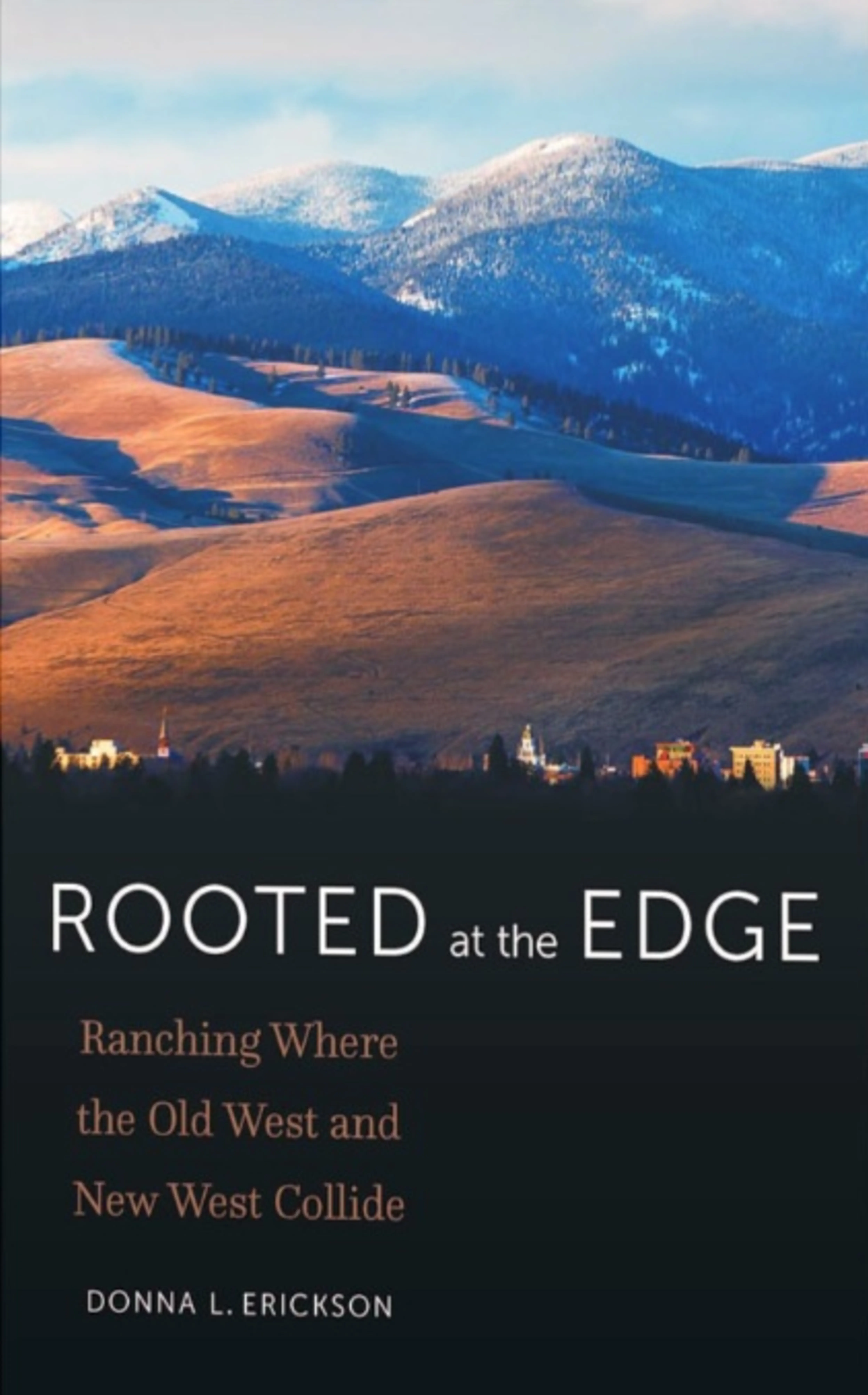
Rooted at the Edge: Ranching Where the Old West and New West Collide
by Donna L. Erickson
Rooted at the Edge paints a portrait of a ranching community steeped in history, conflict and beauty. In this narrative nonfiction work, Donna Erickson explores the hilly skirt of ground at the northern boundary of Missoula, Montana, separating the town from the wilderness beyond. In the movie "A River Runs Through It," opening credits scan across the 1950s town, the North Hills and the wilderness beyond. The North Hills region represents the critical — and often highly personal — issues at play at the edge of many western towns.