The power of women on the land: Palmer Land Conservancy is bringing women together to create community
The land trust is catering events to appeal to and attract a diverse audien, not just in gender, but in race, ethnicity and relationship to the land.

This story originally appeared in the Spring 2024 issue of Saving Land magazine.
Four times a year, Palmer Land Conservancy brings dozens of women together to share a meal, network and hear a speaker in Colorado Springs, Colorado. All the speakers are enthusiastic about land conservation, but each sees it differently, perhaps through poetry, health care, government or architecture. For example, a recent speaker was the curator of history at the Colorado Springs Pioneers Museum.
This Women in Action luncheon series is one of the programs connecting women to the land organized by Palmer Land Conservancy, an accredited land trust serving 19 counties in southern Colorado. In addition to the luncheons, once a year, Palmer hosts an evening event, “Tenacity: Women in Conservation.” About 150 women — “and a few good guys,” said Kristie Nackord, vice president of external affairs for Palmer Land Conservancy — mingle, with appetizers and drinks, before enjoying an on-stage interview and discussion celebrating conservation leaders. The discussion is moderated by Palmer’s CEO, Rebecca Jewett, a recognized leader in conservation herself. Jewett is a member of the Land Trust Alliance’s Land Trust Leadership Council and a 2022 recipient of the City of Colorado Springs Mayor's Young Leader Award. The Oprah-style question and answer session is both intimate and practical, Nackord said.
Both events sprouted from the most ambitious strategic plan in Palmer’s 47-year history, a plan that sees the organization growing its membership, its staff and its land portfolio. The luncheons and the evening celebration answer the question: How can we make conservation more relevant in people’s lives and move beyond our traditional audience, beyond landowners and people in the business of land conservation?
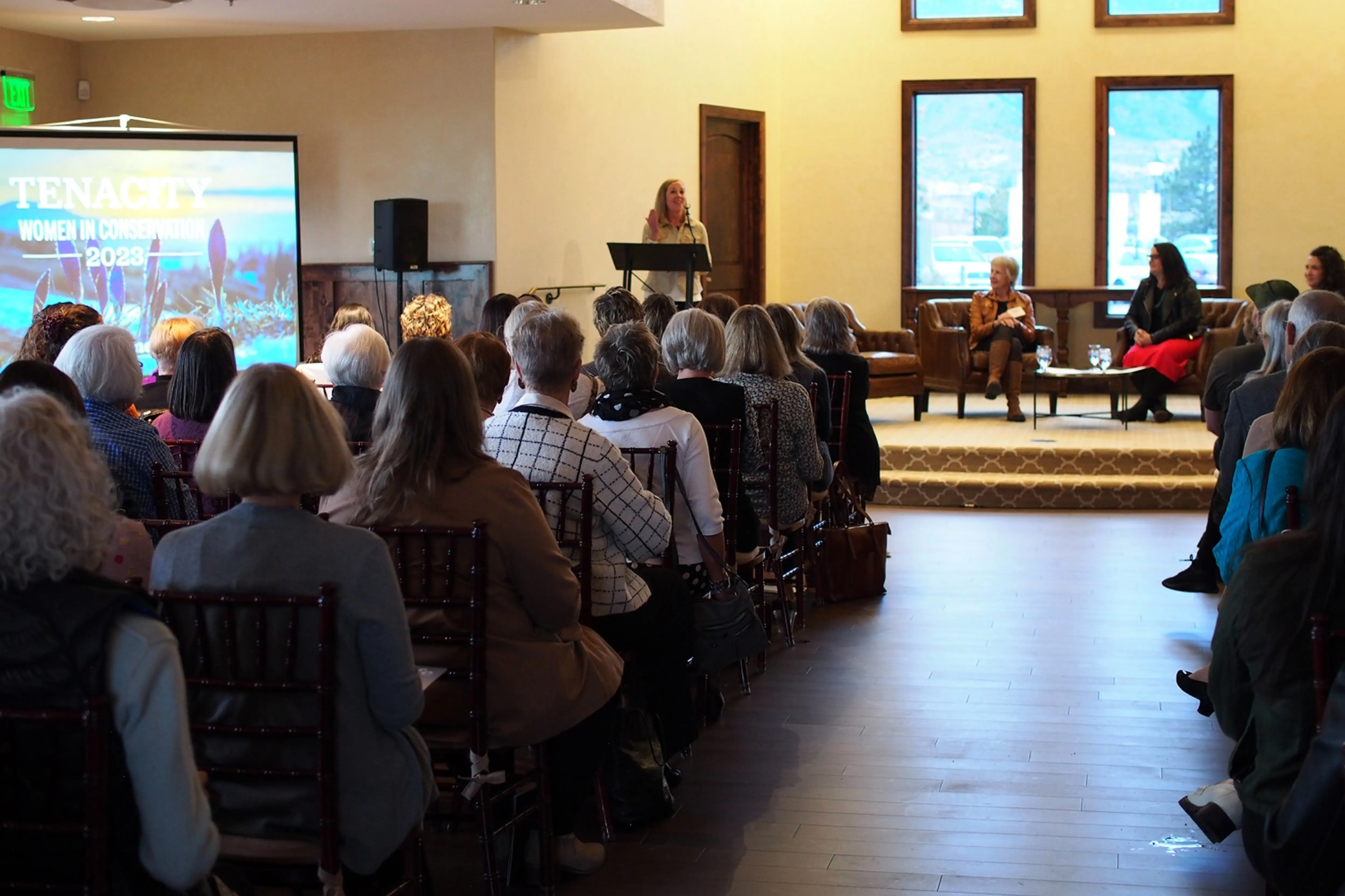
It’s important, then, that the events appeal to and attract an audience that is diverse, not just in gender, but in race, ethnicity and relationship to the land. Palmer addressed this from the start, Nackord said, by including a diverse group of speakers selected by a volunteer committee, which amplifies Palmer’s insights into the community and their social reach.
“As a woman, I have found that there's nothing more powerful than a group of women coming together to effect change,” Nackord said.