In protecting darkness, conservation finds new light
Light pollution doesn’t just obscure the stars and heavens. For wildlife, plants and people, the impacts of light pollution can be disastrous.
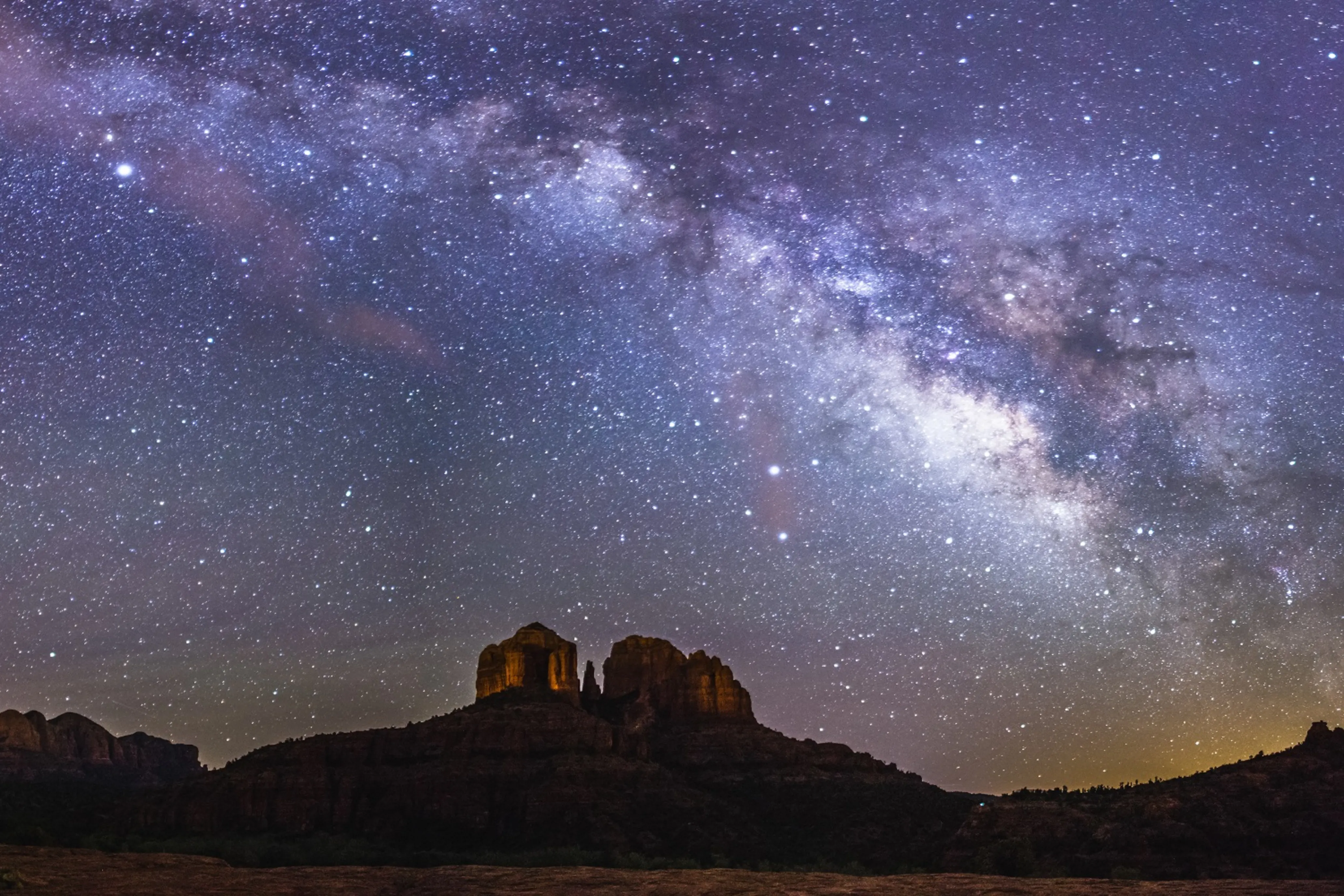
It’s the ground underfoot that land trusts know best. The sentient ways of old forests and brooding mountains; the salt tang of tidal marshes and sagebrush reaches of open rangeland. Compared to these tangible places, the idea that we should protect something as intangible as darkness can seem abstract. What is darkness, after all, but the absence of light? And, in a light-saturated world where 80% of North Americans can no longer see the Milky Way, does darkness still serve its age-old purpose? Those are questions that land trusts, no less than scientists or philosophers, may well consider.
“Everything that lives, not vegetative life alone, emerges from darkness and, however strong its natural tendency to thrust itself into the light, it nevertheless needs the security of darkness to grow at all,” said philosopher Hannah Arendt. And this, from environmental ethicist Erazim Kohák: “We are not only creatures of the light. We are creatures of the rhythm of day and night, and the night, too, is our dwelling place.”
While nearly all creatures evolved to require times of darkness, dark skies themselves are in steady retreat. Drive across most U.S. towns at night and it’s easy to see why. In parking lots, full or empty, soaring light towers blaze like supernovas. On roadways, blue LED headlights glare with pupil-searing intensity. In suburbs and the country, clusters of unshielded yard lights push back the restful darkness of fields and forests.
This insidious spread of light pollution doesn’t just obscure the stars and heavens. For wildlife, plants and people, the impacts of light pollution can be disastrous. Artificial light disrupts the ability of animals, birds, fish and insects to rest, feed, migrate and communicate. Baby sea turtles, for instance, are susceptible to lights near nesting beaches that draw new hatchlings inland, away from their ocean home. Too much artificial light can make plants and trees bud early in the spring and thereby risk frost damage. For humans, excess light at night can lower the production of melatonin that we need for sleep (the National Institutes of Health calls melatonin “the hormone of darkness”). And sleep deprivation, as many know firsthand, can cause fatigue, headaches, weight gain, stress and anxiety.
It is birds, though, that often get the worst of it.
“Birds have to use things to orient,” said ornithologist Susan Elbin, director of conservation and science emerita at NYC Audubon, in an Audubon magazine story that showed how even benign light pollution can cause lethal confusion. “One of the tools in their kit is celestial cues, so they can use the star maps like early navigators.”
The Tribute in Light serves as a cautionary example. It’s an art installation that shines up to 4 miles into the sky above Lower Manhattan on September 11, its two blue beams a visual memory of the fallen Twin Towers. This stirring display also attracts hundreds upon hundreds of birds that circle in its giant, columnar beams like moths around a porchlight. Disoriented and agitated, they can die or expend vital energy that they need for migration.
Conditions have greatly improved since Elbin, NYC Audubon and the Cornell Lab of Ornithology found a workable solution. They use radar to monitor the number of birds in the light beams, count the species and listen for calls that indicate distress. When the count exceeds 1,000, technicians shut off the lights for 20 minutes until the birds move on. It’s a compromise that respects both a hallowed memorial and the wild creatures that are drawn to it.
Keeping light in its place
For land trusts that want to protect dark skies, the good news is this: They already do plenty to combat light pollution. By protecting undeveloped land with little human habitation, they inherently preserve darkness, at no added cost. And, when compared to problems like climate change or invasive species, light pollution offers a simpler fix.
“[Light pollution] is more easily reversible, compared to other conservation challenges,” said Dawn Davies, night sky program manager for the Hill Country Alliance in Austin, Texas. “Changing the color and type of light bulbs, shielding light fixtures, directing light only to where it’s needed and turning off lights when in use — these things go a long way toward getting our view of the stars back.”
Hill Country Alliance promotes awareness and support of natural resources in Central Texas Hill Country. This includes open space preservation, water conservation, and, since 2010, “starry night skies.” The organization has helped draft dark sky protection language for use in conservation easements that has been used by land trusts such as the accredited Hill Country Conservancy. They also conduct dark sky metering and advise on best practices that towns and cities use to create outdoor lighting ordinances.
In Central Texas, which boasts 10 astronomy clubs, such measures have been well received.
“Our climate conditions are so favorable for night skies that it’s part of Texas culture,” said Cliff Kaplan, Hill Country Alliance program director. “‘The stars at night are big and bright, deep in the heart of Texas’ — as the old song goes.”
While dark sky advocates oppose light pollution, they don’t throw shade on all outdoor lights per se. The real problem, Davies said, is that 30% of outdoor lights shine where they’re not intended. Instead of shining only downward, they beam upward and sideways, where they do little to improve visibility or security. Nationwide, this misdirected light wastes up to $3.3 billion annually in energy costs and creates harmful light pollution for people and wildlife.
Hill Country Alliance recommends three basic fixes: Aim and place shields on light fixtures (many shields sell for $5 to $20) so that light shines only where it’s needed; add switches and timed motion sensors so that lights remain off when not in use; and install “warmer” color temperature bulbs (3,000 Kelvins or lower), which emit light that’s more yellow-hued than harsh white-blue.
With low-cost changes to the lighting around homes, streets and outbuildings, it’s not difficult to improve dark sky visibility and reduce harm to wildlife.
This is an excerpt of an article that ran in the Spring 2024 issue of Saving Land magazine. Read the full article here.