Desert voices: Tribal gatherings
The high desert has been stewarded by Native people for thousands of years. A small gathering was held to help connect local Tribal members to their homelands and further land stewardship in the Trout Creek and Pueblo Mountains.
This post originally appeared on the Oregon Desert Land Trust site. For more stories from Oregon's high desert region, check out their "Desert Voices" homepage.
The high desert has been stewarded by Native people for thousands of years. Embracing this traditional knowledge honors the land and its community of Indigenous caretakers. A small gathering was held to help connect local Tribal members to their homelands and further land stewardship in the Trout Creek and Pueblo Mountains.
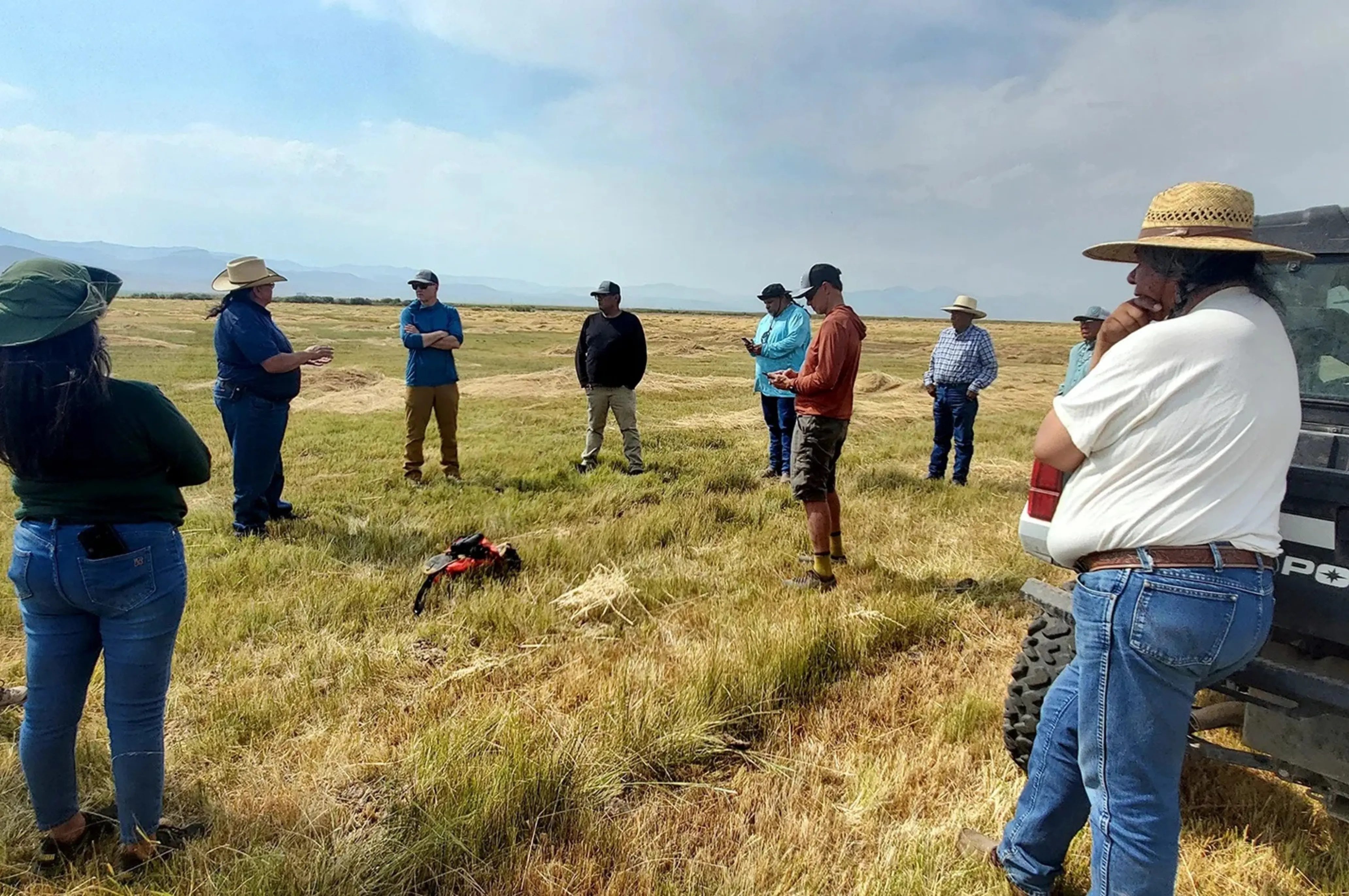
Nine Tribal leaders attended a gathering at Oregon Desert Land Trust’s Trout Creek Ranch. The ranch is home to thousands of years of human history and the event was created in partnership with the Upper Snake River Tribes Foundation to help Tribal members connect intergenerationally and across long distances.
The Numu People, who are commonly known as Northern Paiute, have been stewards of this land since time immemorial and the high desert continues to be important and sacred to them. European settlement caused the tragic displacement of Native communities and now many descendants live on reservations or in other communities that are far from their ancestral lands and families. Some attendees drove nearly 1,000 miles to attend this event and discussed their cultural and personal connections to the land, and their hopes for its stewardship.
As current stewards of the land, it is vital for Oregon Desert Land Trust team members and partners to learn about its Native cultural history and significance to local Tribal members so we can respect their personal connections and aspirations for it. This event is only one part of that commitment, and it was supported by a grant from the Land Trust Alliance’s community-centered conservation program. As part of this effort, we hosted a valuable listening session and workshop with adult Tribal leaders in the summer that will help guide future programs and collaborations.

Attendees came from the Burns Paiute Tribe, Fort McDermitt Paiute-Shoshone Tribe, Shoshone-Bannock Tribes of the Fort Hall Reservation and the Confederated Tribes of Warm Springs. Conservation practices, restoration opportunities and the history of the area were discussed on walks around the ranch’s wetlands as well as the surrounding mountains. All felt it was important to provide youth events that feature land stewardship and traditional practices, as well as opportunities for Tribal leaders to connect on the land. Participants shared ideas on possible topics and themes; many focused on stream and spring restoration, land management and access, cultural preservation and climate resilience.

Oregon Desert Land Trust board member Wilson Wewa helped plan the event. He is a Tribal Council Representative of the Confederated Tribes of Warm Springs and encouraged having hands-on outdoor experiences that will inspire young people. He spoke about the value of water conservation and inspiring youth to think, “‘I want to test bacteria in the water to know whether it’s safe to drink or not safe to drink,’ ‘I want to be out here in the habitat counting sage grouse because it’s my cultural connection,’ or ‘I want to be involved in seeing pictographs or petroglyphs.’”
Tribal leaders shared that the areas within the Pueblo and Trout Creek Mountains are not only part of their traditional homelands but lie near the heart of their homelands. They expressed how involvement in caring for these lands could assist in strengthening intergenerational connections and provide career opportunities for Tribal youth.

The land trust and Upper Snake River Tribes have shared interests in helping Tribal members deepen and restore connections to their ancestral lands. Upper Snake River Tribes was established by four tribes of the Upper Snake River region in Idaho, Nevada and Oregon: the Burns Paiute Tribe, Fort McDermitt Paiute-Shoshone Tribe, Shoshone-Bannock Tribes of the Fort Hall Reservation and Shoshone-Paiute Tribes of the Duck Valley Reservation. Their common vested interests are to ensure the protection, enhancement, and preservation of the Tribes’ rights, resources, cultural properties and practices, which include hunting, fishing, gathering and subsistence uses.
“It was a very impactful weekend for me in that I was given a lot of hope for the future,” said Rhys Kutschbach, the Upper Snake River Tribes' outreach and education coordinator. “Seeing how far Trout Creek Ranch has come and knowing how much further it can go was energizing. I have high hopes for this area being a great campus for Tribal youth to come and become more connected with the environment and their culture. Hearing the thoughts and ideas the Tribal elders and leaders had allowed me to visualize a future where traditional land stewardship could be revived.”

Several attendees had personal experience working on neighboring ranches in their youth and discussed the importance of coming together with neighbors, state and federal land managers, and others to share personal histories and knowledge. We look forward to creating these opportunities in an event in 2024 and exploring various pathways to support local Tribes in partnership with Upper Snake River Tribes and others.
The views, thoughts and opinions expressed in this blog are the author's own and do not necessarily reflect the views of the Land Trust Alliance, its staff, its board of directors or any other individuals associated with the organization.