Conservation “speed-dating” for birds and farms
Conservation “speed-dating” ❤️ swaps awkward chit-chat for one-on-ones with conservation pros.
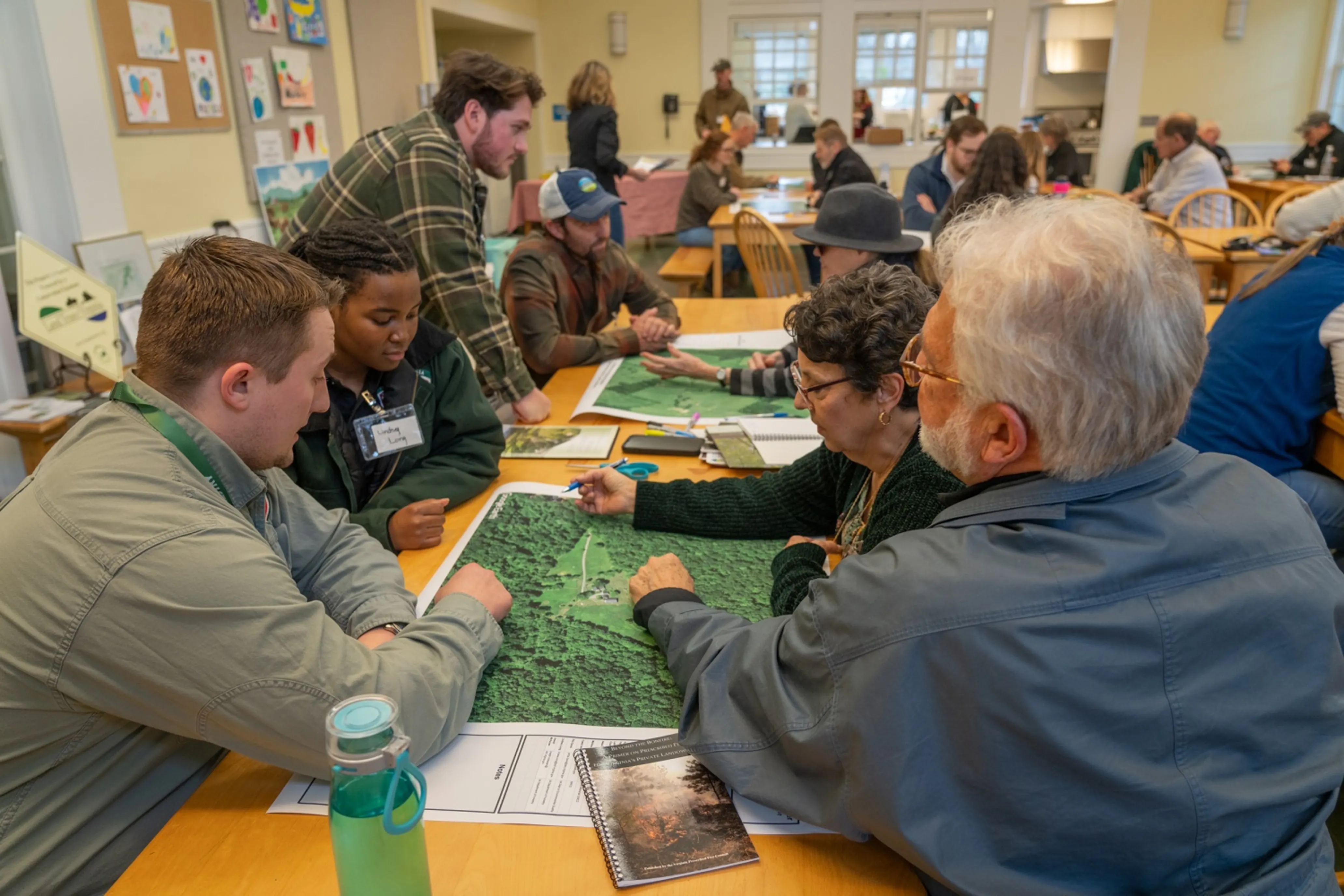
In Northern Virginia’s Piedmont region, conservation “speed-dating” swaps awkward chit-chat for one-on-ones with conservation pros.
The Virginia Grassland Bird Initiative hosts conservation speed-dating workshops that move landowners from table to table for quick, 10-minute consults with conservation professionals. The initiative includes partners such as the Smithsonian’s Virginia Working Landscapes, Piedmont Environmental Council, American Farmland Trust and Quail Forever.
The program offers a one-stop shop to introduce conservation-minded farmers and landowners to technical experts who can advise them on practices that improve biodiversity, landscape resilience and production efficiency. The mini sessions focus on practical fixes: rotational grazing, invasive species removal, soil health, native tree and grass plantings, and watershed protection.
The workshops are important because of the critical role that farms play in land, water and wildlife conservation. In Virginia, grassland birds are found almost exclusively on hay and livestock farms. Yet their numbers have plummeted — down about 34% since 1970.

“Finding the right technical assistance can be confusing and time-consuming,” said Justin Proctor, the Virginia Grassland Bird Initiative coordinator. “Speed-dating workshops bring all these groups together in one place.”
Workshops are centered around large, aerial maps of each property, which allow conversations to target the specific needs and goals of each farmer. The speed-dating format usually allows each farmer to meet with 10-12 professionals from different state and federal agencies, land trusts and nonprofits.
“Local partners report the format is far more efficient than chasing separate meetings,” said Proctor.
The organization created a Guide to Conservation Speed-Dating Workshops to assist with implementing such events so that other organizations can run with the concept.
Guide to Conservation Speed-Dating WorkshopsThis article originally appeared in Saving Land, Fall 2025 (Vol. 44 No. 4).