Connection to the land is good medicine
A new report from the Land Trust Alliance and Native Land Conservancy offers guidance, resources and case studies of Indigenous land access and return.

Editor’s note: This spring, the Alliance, Tahoma Peak Solutions and Native Land Conservancy released a new report, “Partnerships for Indigenous Land Access and Return: A Summary of Legal and Relational Pathways.” The report offers guidance, resources and case studies of Indigenous land access and return. In the course of researching this report, the authors conducted numerous interviews and identified more than 70 partnerships between land trusts and Tribal nations or organizations. The following excerpt is the introduction to the report.
Download the full report here.
Through this project, it has been a true honor to sit down with Tribal leaders and listen to their stories and wisdom. When reflecting on these conversations, what resonates most for me is how the land remembers us and calls us home. To truly know ourselves, we must know the land — it’s our heartbeat, our lifeline, it’s who we are. Hawk Rosales, Ndé (Apache) lineage and lead consultant to the InterTribal Sinkyone Wilderness Council, said, “Remove Indigenous people from these relationships and it’s disastrous.” These relationships are so essential to our health and well-being that when we’re disconnected, we see it in our people. Yet, healing and hope lie in restoring these connections.
“So if you care for the land, the land takes care of the people, it’s part of each other, you know, ancestors and everything,” said Lance Foster, Iowa Tribe of Kansas and Nebraska and Tribal historic preservation officer and director of Ioway Tribal National Park. “Doing the land right and reconnecting to the land in that way, heals a lot, heals families.
“Connection to the land is good medicine,” he added.
For many Tribal nations and people, reconnecting to the land can feel very challenging due to the nuance, entanglements, confusion of colonial laws, arbitrary U.S. borders, great distances, recognition status, financial limitations and lack of respect for Tribal sovereignty.
“The land itself doesn’t know any of these barriers and doesn’t know anything about the deeds or anything like that,” said Ramona Peters, Mashpee Wampanoag and founder of the Native Land Conservancy.
“You spend enough time outside and those lines get very blurred; it still has our ancestral imprints there. … There’s nothing that can take that away.”
Regardless of current circumstances, no one can take away our relationship to the land and those land relationships that have existed since time immemorial, which make Indigenous people critical leaders in land conservation efforts.
“Land is recognizing the people returning to that place," Peters said. "Welcoming back those original people. Ancestors who are present in these places for so long. They did things that the land recalls, remembers. When it’s interrupted and Native people come back, they will revitalize those connections to the land. That principle of Tribal leadership will come out and be informed by that dynamic.”
Those memories, knowledge and histories run deep and guide us as protectors and voices for our land and water relatives.
As I conducted interviews for this report, both Indigenous and land trust leaders emphasized the importance of centering Indigenous leadership in conservation work. This means valuing and prioritizing Indigenous voices, perspectives, knowledge, experiences and ways of being throughout partnerships and projects. Indigenous insights, relationships with the land, cultural values and histories are crucial to effective stewardship and addressing urgent climate concerns.
“Tribes are not just involved, they are leading,” Peters said. “We want to lead.”
“We look at them [plants and animals] as relatives,” Rosales added. “We are connected to them forever. That is why conservation needs Indigenous leadership. Especially with these threats upon us and growing all the time.”
Indigenous leadership in conservation is guided by relationships to land. These relationships hold deep knowledge and teachings that benefit not just Indigenous people but everyone, including our more-than-human relatives.
“When Indigenous leadership is there, you have amazing success and commitment and outcomes to the community,” said Rosales. “All the community — not just humans.”
The relational and legal approaches outlined in this resource offer practical information on avenues for Indigenous land access and return, but the heart of the matter is, and always will be, reclaiming and revitalizing Indigenous peoples’ relationships to land. These connections support the healing, health and well-being of Indigenous people and all our human and more-than-human relatives.
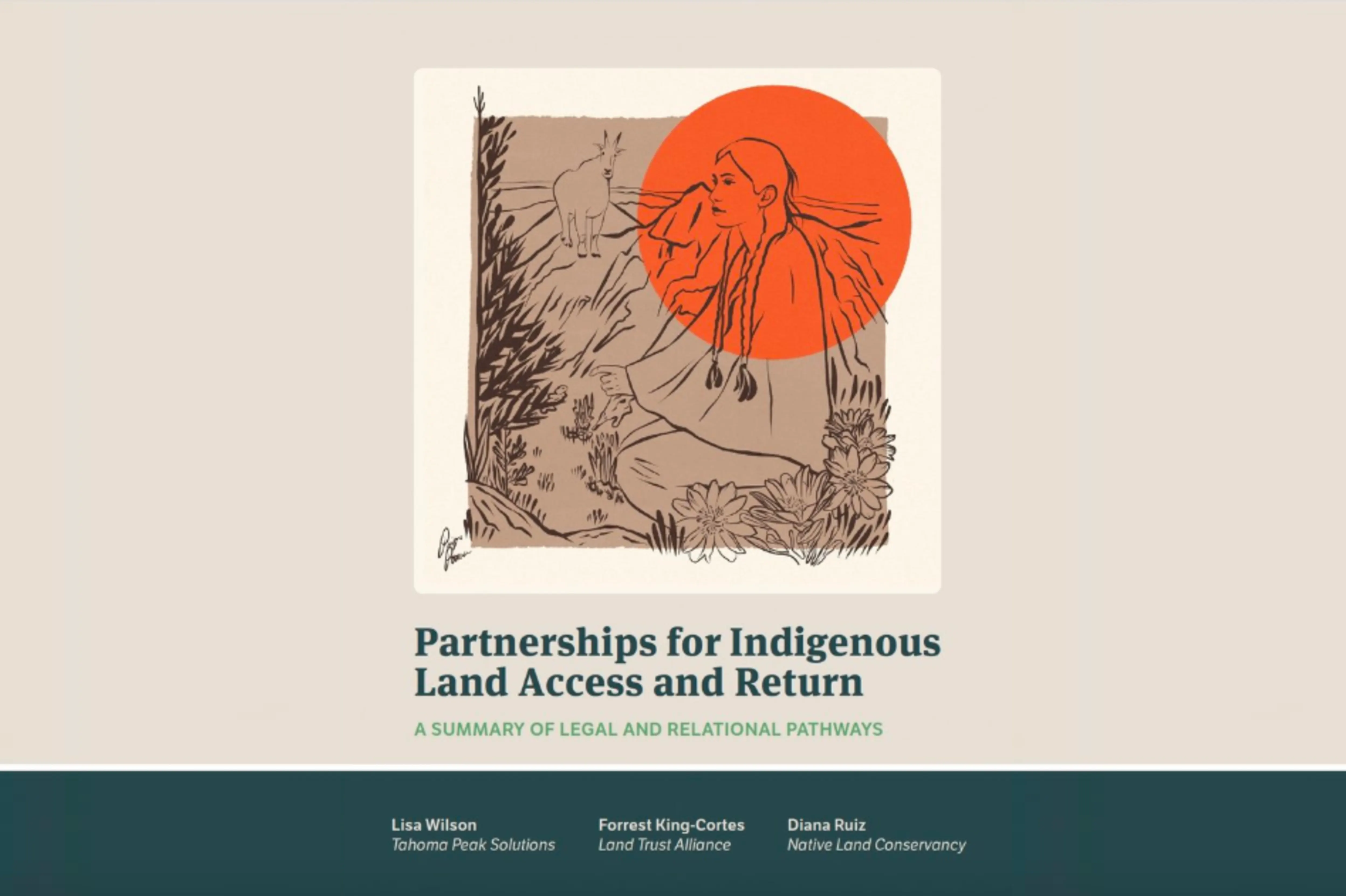
Partnerships for Indigenous Land Access and Return: A Summary of Legal and Relational Pathways