California red-legged frog makes remarkable comeback
The Land Trust of Napa County is leading a remarkable project to restore populations of the threatened species.
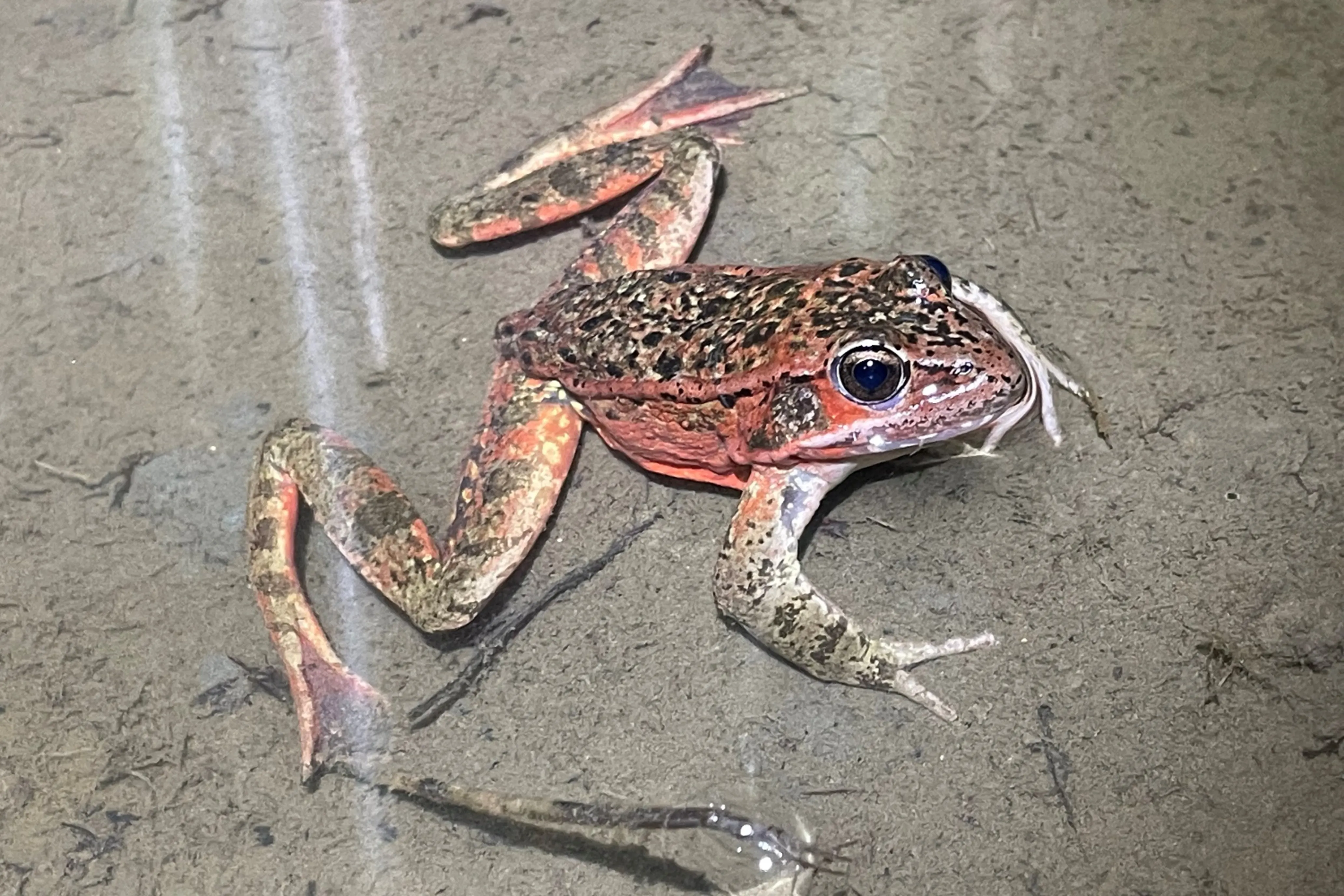
Author Mark Twain made the California red-legged frog famous in his story “The Celebrated Jumping Frog of Calaveras County.” At 2 to 5 inches long, the red-hued amphibian is the largest native frog in the western United States.
But over the last 50 years, the jumping frog — a federally threatened species — has vanished from 70% of its native range, including Yosemite National Park, due to habitat loss and invasive predators such as the American bullfrog.
Now, the Land Trust of Napa County is leading a remarkable project to restore populations of the frog. In early 2022, the accredited land trust launched a restoration initiative on a 2,000-acre wildland preserve in southeastern Napa County. The restoration project is funded by an Endangered Species Conservation and Recovery Program grant from the U.S. Fish and Wildlife Service and the California Department of Fish and Wildlife.
Project activities include translocation of partial egg masses from a donor site into high-quality pond habitat on the preserve, upland habitat enhancement, tagging and tracking of individual frogs, and botanical surveys to track post-fire changes in habitat structure. The land trust partners with consulting biologist and red-legged frog expert Jeff Alvarez of The Wildlife Project.
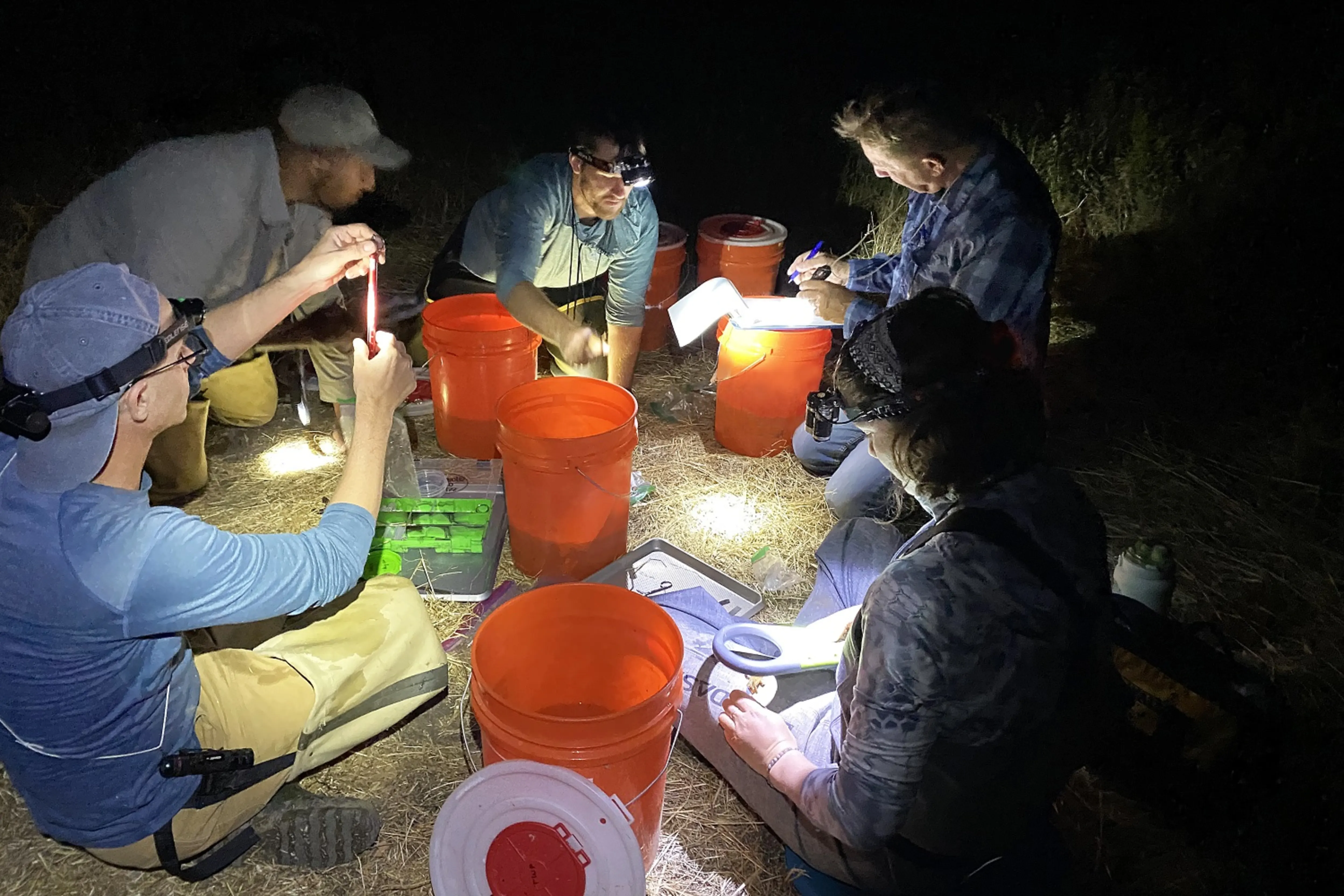
A year and a half after its initiation, the project is yielding significant progress. More than 800 frogs successfully metamorphosed from tadpoles in the project’s first two years. Land trust staff have observed wild egg masses in multiple preserve ponds produced by mature frogs that developed from eggs translocated in 2021, marking the establishment of a new reproductive population of red-legged frogs.
“This restoration project demonstrates how important it is to go beyond solely the acquisition of important natural areas,” said the land trust’s stewardship director, Mike Palladini. “With carefully planned and implemented restoration efforts, protected areas like this one harbor the potential to counteract negative trends for native species that have been in decline for many years.”
This story originally appeared in the Winter 2025 issue of Saving Land magazine.