Behind the scenes with: Lori Faeth, federal government guru
Some of the most important conservation work doesn't happen in nature, but inside Capitol buildings and federal agency offices. Lori Faeth, the Alliance’s senior director for government relations, shares what it really takes to move conservation policy forward.

For many people, conservation happens in forests, grasslands, wetlands or watersheds. But a huge part of the work unfolds far from the field — inside Capitol buildings, agency offices and behind-the-scenes negotiations. I spoke with Lori Faeth, the Alliance’s senior director for government relations, about what it really takes to move conservation policy forward behind the scenes.
Land Trust Alliance: Most people don’t see the policy side of conservation. How would you describe your job to someone outside the field?
Lori Faeth: The way I describe my job is to say that we advocate for the policies and resources to help our member land trusts conserve land. That can mean a number of things, such as improving the implementation of existing conservation programs, ensuring programs are adequately funded, and sometimes creating new programs with funding to fill gaps in conservation.
Alliance: What originally drew you to this line of work? Did your career follow a straight line, or did you find your way here unexpectedly?
Ms. Faeth: A bit of both. When I joined a conservation organization following a career in residential and investment real estate, I landed a job in the policy office without much background or experience. I was hooked from the start and had great mentors who gave me lots of opportunities to learn and grow, which opened a lot of doors. I really love this niche in the conservation world, but sometimes I wonder what it would be like to have a job that takes me outside regularly and is closer to the lands our members are conserving.
Alliance: What does a typical day look like for you? And what’s one example of the “invisible” work that you do that most people never see?
Ms. Faeth: I don’t think there is a typical day for me, which keeps things interesting. I coordinate with my team and my Alliance colleagues; I talk to federal agency staff or Hill staff and our partners. I read various publications and check out official websites to try and stay on top of what is going on.
I don’t think people understand the level of work that goes into trying to keep our members up to date on relevant issues and how things might impact the work of the land trust community.
Alliance: What’s a misconception people have about lobbying or advocacy work?
Ms. Faeth: I think there are two misconceptions. First, a lot of people think that if you work for a nonprofit, you cannot lobby. That is not true. Yes, there are laws and regulations that guide us, but nonprofits certainly can engage in this work, and it is really important that they do so, because it is the best way to ensure decision-makers understand and support this important work.
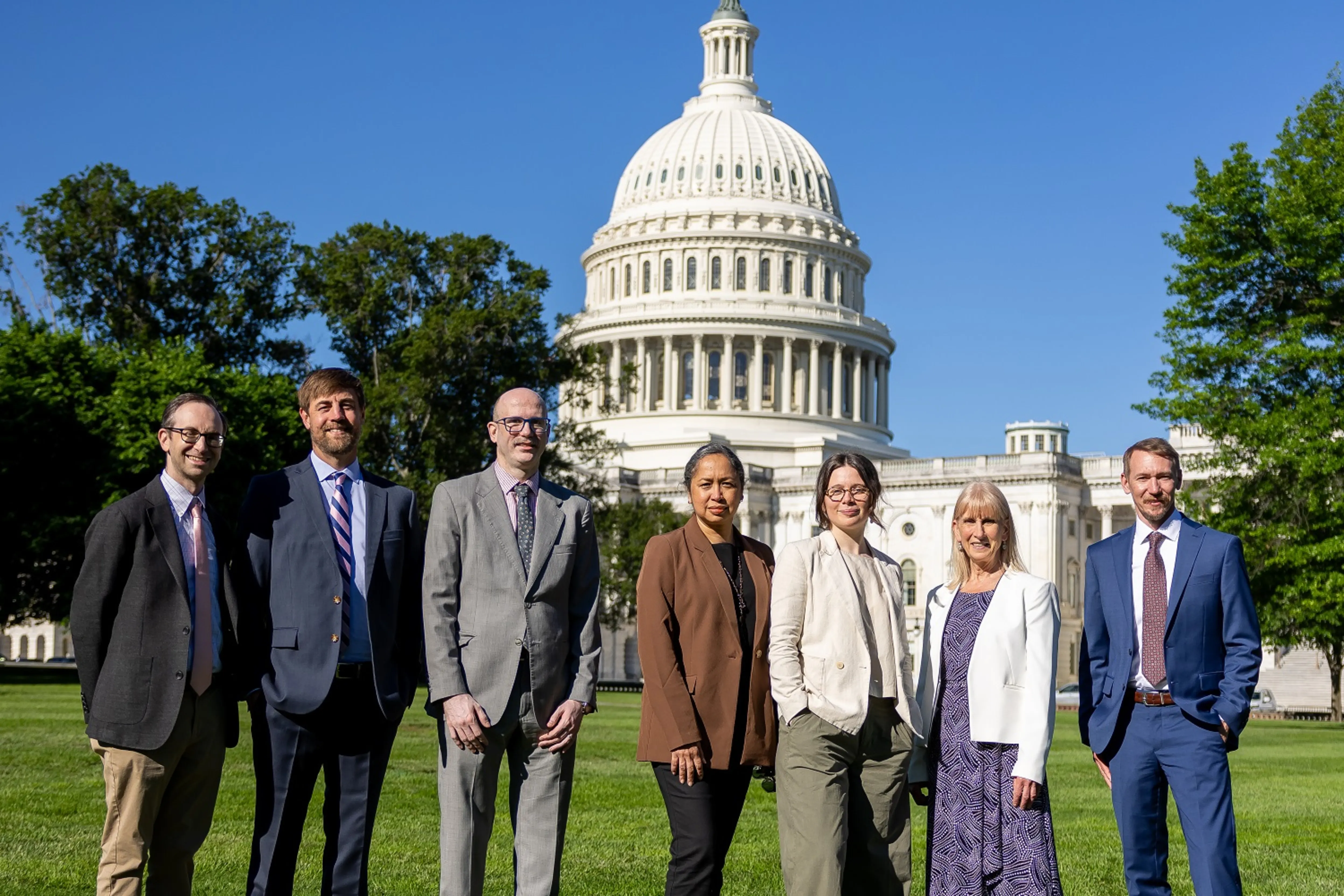
The other misconception is that it is scary to meet with elected officials or their staff. Nothing could be further from the truth — it is just sharing information with people who are in a position to help advance our work. Each year, as part of our annual fly-in, we invite a Hill staffer to join us and talk about how to engage with them. It’s easy, and it’s really fun. They might not always agree with you or support the work you are doing, but they generally appreciate hearing from people — especially from constituents.
Alliance: How do you build effective relationships with lawmakers and federal agencies? And is that process different now than it was 10, 15, 20 years ago?
Ms. Faeth: It is the same as building any relationship — you need to know your audience, be truthful, and if you can share a story about a local project or landowner, all the better. The process has not really changed over the years — it is about getting to know someone, building trust, and letting them know you are a resource they can count on.
Alliance: How do you balance the “ideal” policy goal with what’s politically achievable?
Ms. Faeth: One of the things that drew me to the Alliance is our practical, nonpartisan approach to this work. Being practical means understanding that you are not likely to get everything you are seeking or that there may be other ways to accomplish the same thing. You have to go into negotiations with an understanding of what is really important and have the willingness to be open to other ideas. It’s very similar to so many things in life.
Alliance: Inside the Alliance, who are some of the people or departments that you rely on most to get the policy work right?
Ms. Faeth: Our policy and advocacy work spans a lot of the Alliance, but we probably work most closely with our conservation defense and communications teams, as well as the Alliance field staff.
Alliance: Is there an Alliance policy win you’re especially proud of?
Ms. Faeth: I was really proud that the 2018 Farm Bill reflected most of the Alliance recommendations. It was the first thing I worked on when I joined the Alliance in 2017, and it gave me the chance to work closely with Alliance members from across the country as we worked with the Hill to refine language and address concerns. It helped me understand the important role the Alliance plays in advancing the policy priorities of our community and the power behind our ability to harness the voice and expertise of the land trust community to get things done.
That said, I think that passing the Charitable Conservation Easement Program Integrity Act will always be a point of pride. Explaining the abuse of conservation donations was a bit tricky because it is complicated and really in the weeds. So, that was a challenge. In addition, the folks who were engaged in the abuse were fighting hard to prevent the bill from passing. I have done natural resource policy work for most of my career and have faced strong opposition over the years, but I have never faced anything like what we saw with the “syndicators.” They went on the Hill and used messages that made them sound like us, which was confusing for decision-makers. They outspent us by millions of dollars. So, the fact that we were able to get it passed and signed into law was really great. Of course, it would not have happened without our congressional champions, who were committed to halting the abuse and ultimately found a path to get it done. It was a big win for our community, and I am really proud to have been a part of it.
Alliance: What keeps you motivated in a field where progress can be slow?
Ms. Faeth: I really believe in the work of the land trust community — voluntary private land conservation is the solution to so many things in life. Plus, I get to work with my incredible Alliance colleagues, our land trust members and partners, as well as people on the Hill and at the federal agencies — working with great people who care about this work is very inspiring. Some days it can be challenging, but overall, the way we approach our work and the importance of what is accomplished really motivates me.