An interview with: Kenya Crumel, National Black Food & Justice Alliance
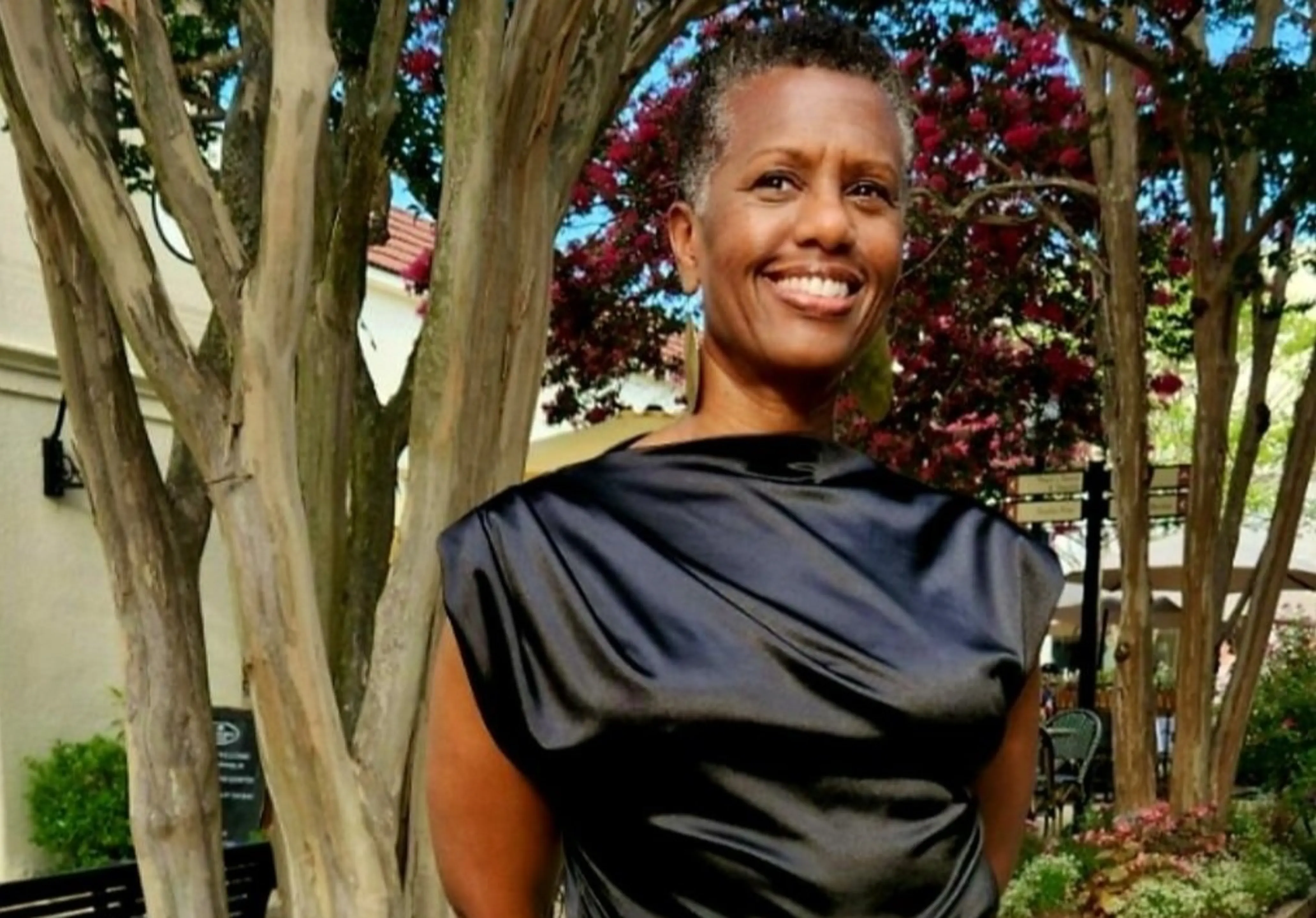
We speak with Kenya Crumel of the National Black Food & Justice Alliance about the history of Black land ownership and efforts today to increase Black land retention, protection and recovery.
February is Black History Month, a celebration the origins of which can be traced back as far as February 1926, when historian and author Carter G. Woodson created Negro History Week. The first observance of Black History Month took place at Kent State University in 1970. President Gerald Ford federally recognized Black History Month for the first time in 1976, during the celebration of the United States Bicentennial.
Below, we speak with Kenya Crumel of the National Black Food & Justice Alliance about the history of Black land ownership and efforts today to increase Black land retention, protection and recovery.
The views, thoughts and opinions expressed in this blog are the author's own and do not necessarily reflect the views of the Land Trust Alliance, its staff, its board of directors or any other individuals associated with the organization.
Land Trust Alliance: Tell us about your personal connection to the land and what led you to your role as Black Land & Power director at the National Black Food & Justice Alliance.
Kenya Crumel: Like many Black families in America, I have roots in the South but was raised up north. Although I was raised on a wooded acre of land in suburban New Jersey, my first connection to land stewardship was through my family’s annual return to my paternal grandparents’ land in rural South Carolina. On those trips and during one long summer there, I experienced the tranquility of spending time with the livestock and appreciating the beauty of nature. When I was a little older, I was also able to visit my maternal grandfather’s homeland of Grenada and deeply connect with that beautiful Caribbean land and finally understood my grandfather’s passion for growing food and indulging in the wonderful spices of his native island.
Before joining the staff of the National Black Food & Justice Alliance, I helped to build the capacity of nonprofits through the provision of technical assistance and training. However, because I was constantly shifting between community development issues like affordable housing, workforce development and economic empowerment, I lacked the capacity to focus on the root causes of any one issue. Once I recognized this disconnect — realizing that my spirit yearned to dismantle the root causes of inequities rather than apply temporary fixes — the universe led me to the National Black Food & Justice Alliance.
The organization is a coalition of Black-led organizations aimed at developing leadership, supporting communities, organizing for self-determination and building institutions for Black food sovereignty and liberation. As the director of the National Black Food & Justice Alliance’s Black Land & Power workgroup, I lead member committees and councils that are composed of Black farmers, land stewards, homesteaders and advocates through democratic decision-making to develop programs and institutions that serve our constituents. This work is deeply personal — I am grateful that my family connection to land, my lifelong interest in finance and my passion for food as medicine have all culminated in this amazing opportunity to support farmers and land stewards in the critically important work that they do.
Land Trust Alliance: February is Black History Month, and many readers may not be familiar with the history of Black land ownership in America, and in particular, the precipitous decline in Black land ownership during the last 125 or so years. Why is it important for those working in real estate and land conservation to ground themselves in Black history?
Kenya Crumel: Knowing that during the Reconstruction Era, despite broken promises, exploitation and Black Codes (that restricted Black mobility), Black people managed to scrape, save and secure 16-19 million acres of land by 1920, leads one to then ask how 98% of that land transferred to white families by the 1990s. A person who does not know the history of this country could easily be led to believe that Black people simply gave up that land, while that could not be further from the truth. Black land has been systematically taken through political and corporate maneuvers and domestic terrorism. There are dozens of examples of thriving Black communities that have been intentionally destroyed via fire (the Greenwood district of Tulsa, Oklahoma), flood (Oscarville, Georgia, lies underneath what is known today as Lake Lanier) and bulldozer (Seneca Village existed where New York City’s Central Park now exists), yet most Americans have no knowledge of this history. Lives, livelihoods and generational wealth were swept away with those violent acts, and those actions have repercussions that reverberate to this day in the form of a staggering racial wealth gap: On average, Black families have 23 cents for every $1 of white family wealth.
So, as we are witnessing the dismantling of policies created to right these wrongs, these stories must be amplified. Documenting and acknowledging historical facts is a prerequisite to this country approaching conservation through an economic justice lens so that we can work toward a future where collective land stewardship involves all citizens, not just those who are wealthy and white.
Land Trust Alliance: Talk a little about the Black Land and Power program at the National Black Food & Justice Alliance and the goal to train and support Black land stewards.
Kenya Crumel: The National Black Food & Justice Alliance, and subsequently the coalition working in the Black Land & Power workgroup, was formed because of the essential need for deeper, coordinated and strategic organizing amongst food and land justice organizations — particularly in this political climate. If our history is an example, we must move past individual notions of ownership, which still left us vulnerable under racial capitalism. Black communities have a deep connection to the earth with land as a source of spiritual, economic, cultural and communal grounding. Land, safe space and the means for self-determination continue to be assaulted and undermined, thus the need to form an organized, multifaceted and collective long-term response is urgent.
The Black Land & Power workgroup is working to deepen collective strategy toward regional and national Black land retention, protection and recovery. Our members organize to defend land at risk of theft, collectively purchase and steward land, and train farmers and land stewards in the skills necessary for building a healthy and mutually beneficial relationship with the land. To be clear, our land justice work is very much connected to our ultimate goal of achieving food sovereignty and eradicating food apartheid.
Land Trust Alliance: What is the Justice for Black Farmers Act?
Kenya Crumel: The Justice for Black Farmers Act was introduced by Senator Cory Booker (D-N.J.) in 2021 and has been reintroduced in subsequent years. It intends to enact policies to end discrimination within the USDA, protect remaining Black farmers from losing their land, provide land grants to create a new generation of Black farmers and restore the land base that has been lost, and implement systemic reforms to help family farmers across the United States. Obviously, the goals of the bill are not aligned with the values of the current administration, however, we are not discouraged or dismayed. The National Black Food & Justice Alliance and many other organizations will continue to organize and build with or without the support of the federal government.
Land Trust Alliance: Black leadership must be centered in efforts to increase land access and stewardship. How can potential allies — such as land trusts — help?
Kenya Crumel: Everyone must know and spread the truth. In this age of intentional disinformation, it is important for everyone to root out facts from reliable, objective sources and work in partnerships to create and implement practices and policies that can repair the damage that has been done. Potential allies can transfer land, donate capital and offer professional expertise and influence to enact changes that will benefit communities that have been traditionally marginalized. In order to make progress, people have to be willing to step out of their comfort zone and speak up and act in ways that their peers may not approve. In the words of Martin Luther King, Jr.: "The time is always right to do what is right.”