A shared journey into salmon conservation
On a sunny and only slightly chilly Thursday morning, Kachemak Heritage Land Trust and Kachemak Bay National Estuarine Research Reserve hosted a 'Fish Need Land Too' field trip.

The views, thoughts and opinions expressed in this blog are the author's own and do not necessarily reflect the views of the Land Trust Alliance, its staff, its board of directors or any other individuals associated with the organization.
On a sunny and only slightly chilly Thursday morning, Kachemak Heritage Land Trust and Kachemak Bay National Estuarine Research Reserve hosted a Fish Need Land Too field trip for the Salmon Sisters crew, friends and family.
More than two dozen participants gathered to learn and share about the intricate relationship between land and salmon habitats, emphasizing the importance of protecting land for healthy salmon populations.


The field trip
The field trip began at the Stariski Creek bridge along the Sterling Highway, where we gathered to carpool to our first field site — an upstream channel of Stariski Creek, overlooking property owned by the land trust that we call “Stariski Meadows.”
Here, Kachemak Bay National Estuarine Research Reserve scientists hopped in the small stream to corral baby fish using a large net called a stream seine and then transferred the fish into photariums for easy viewing. We saw young coho salmon, steelhead trout and even a juvenile sculpin! By finding that baby salmon live here, it became immediately apparent that salmon require these small, inconspicuous, freshwater streams to start their lives.

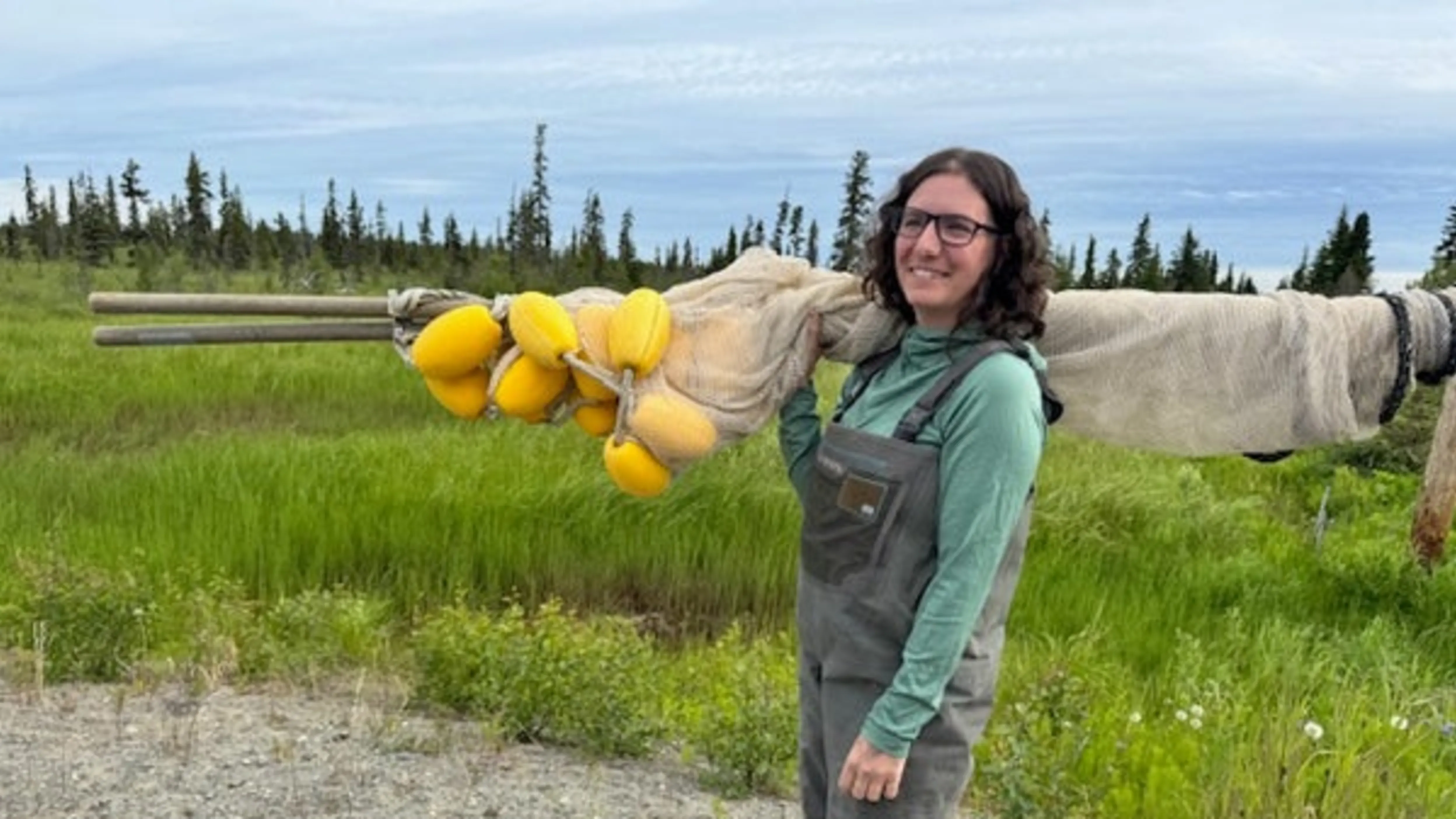
The research scientists taught us how the plants, insects, minerals and water temperature all play a role in supporting life for baby salmon and are all influenced by the surrounding land. Marie McCarty, Kachemak Heritage Land Trust’s executive director, described how the land trust came to own the property and how some parts were in pretty bad shape when we first took ownership.

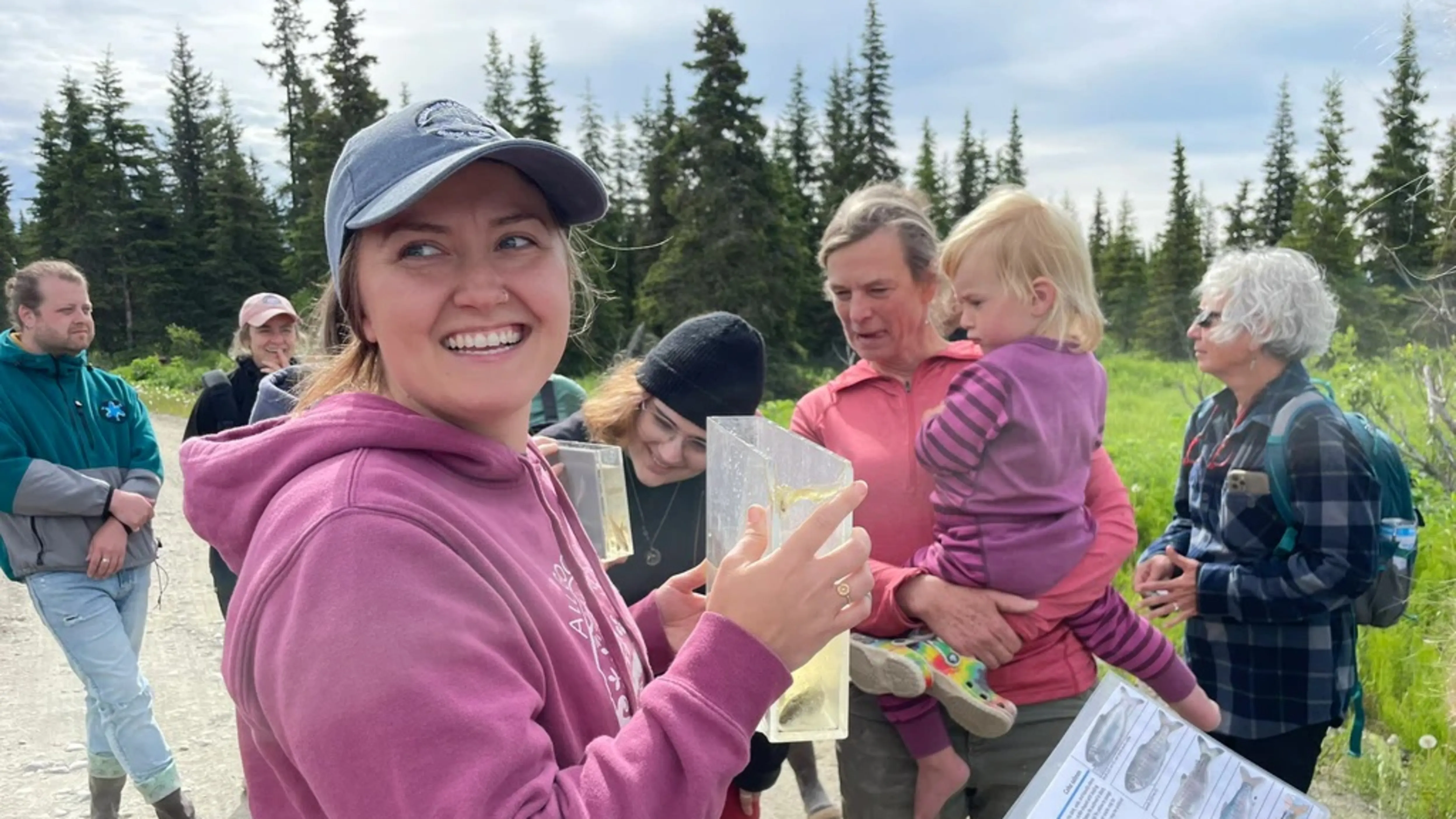
After examining the juvenile salmon (and safely returning them to their stream), we proceeded up the road to the Stariski peatlands field site — another piece of the property owned and protected by the land trust.
We carefully marched into the wide-open, spongey wetlands. We noticed the many tiny plants underfoot like sundews and bog orchids. The thick, cool earth rich in organic matter and carbon is called a peatland, which is a type of terrestrial wetland. Peatlands act like an insulating blanket — as water filters though, they collect important nutrients, and they keep the groundwater entering streams cool in the summer and warm in the winter. Baby fish need this temperature-controlled water while growing up until they can brave the ocean.
A Kachemak Bay National Estuarine Research Reserve technician plunged a metal soil corer into the earth, pulling out a peat sample. We got to touch the rich, cool, wet soil that provides a critical role in the salmon habitat. Twenty years of collaborative watershed ecology research have revealed that nitrogen and carbon — the building blocks of nutrition for the fish we love — originate from alders and peatlands and then flow outward from the small headwater streams to the estuaries and marine ecosystems.

It’s easy to think of protecting fish populations as a water-only issue, but by examining the activity in small streams miles from the ocean, we can see the importance of land to salmon. Imagine what it would do to our fish population if every area that housed streams and wetlands were paved, damaged or buried beneath buildings. Without enough protected land, we would lose the space and the ecosystems where juvenile fish safely grow, and we would jeopardize future fishing resources.
Anytime we get to see baby salmon, we consider it a good day. What made this event special was the ability to gather some of the salmon’s biggest supporters to highlight how ecological research and protection of land can directly bolster and complement the work of our fishing community.
Fish bring people together
This Fish Need Land Too event was a wonderful way to unite our various organizations and share expertise and passion for salmon conservation.


Fish Need Land too field trips allow participants to witness firsthand how land management practices directly influence salmon habitats. The collaboration between Kachemak Heritage Land Trust, Kachemak Bay National Estuarine Research Reserve and Salmon Sisters demonstrates the power of working together to protect and sustain our precious natural resources which are an essential part of our Alaskan way of life.
These types of partnerships can lead to real, actionable change. Just this year, Kachemak Heritage Land Trust has been able to protect extremely important pieces of land within the Kenai River watershed, along the Anchor River and at the headwaters of Two Moose Creek. These projects were made possible by financial contributions from our community, strong partnerships with diverse organizations and agencies, and teamwork in spreading the message that Fish Need Land Too. You can learn more about our three most recent projects protecting more than 150 acres in an upcoming blog or on our website.
Do you want to make a difference today? You can support small Alaskan businesses and save land by purchasing a Wild Salmon Forever hoodie from Salmon Sisters. 15% of the proceeds from this hoodie are donated to Kachemak Heritage Land Trust.

This story, Fish Need Land Too: A Collaborative Journey into Salmon Conservation, originally appeared on the Salmon Sisters website.
All photos courtesy Kachemak Heritage Land Trust.