Birds are helping Sonoma Land Trust and partners reduce the frequency and severity of wildfires
As California grapples with the increasing frequency and severity of wildfires, Sonoma Land Trust and its partners are turning to birds as powerful indicators of ecosystem health.

Through its collaboration and partnership with the Land Trust Alliance, the Cornell Lab of Ornithology is connecting with and supporting land trusts in their efforts to protect bird habitat on private lands and for birds to help support land trust planning and stewardship efforts. We're happy to share their bird conservation success stories from land trust partners across the country.
[*Editor’s Note: This article follows the American Ornithological Society's recommendation that all bird names are capitalized to prevent confusion between taxonomic and descriptive words.]
As California grapples with the increasing frequency and severity of wildfires, land managers across the state are seeking solutions that both reduce fire risk and protect ecosystems. Amid these challenges, Sonoma Land Trust and its partners are turning to birds as powerful indicators of ecosystem health.
“Birds respond quickly to environmental change, they’re relatively easy to monitor, and they occupy nearly every habitat niche,” said Ryan Berger of The Wildlands Conservancy, one of Sonoma Land Trust’s core partners. “They’re excellent indicators of overall habitat health, and they help us understand how our management practices are impacting the land.”
Birds aren’t just ecological indicators — they’re also community builders. Sonoma Land Trust has long relied on local birders and participatory scientists to help monitor the lands it protects.
“There’s a real lineage here,” said Shanti Edwards, Sonoma Land Trust’s Sonoma Coast program manager. “From the Christmas Bird Count that’s happened at one of our preserves since 1987 to the Jenner Headlands Hawk Watch, birders have been watching over these lands for decades.”
A small grant project in 2022 brought Sonoma Land Trust, The Wildlands Conservancy and Point Blue Conservation Science together. Their shared goal: to examine how birds — particularly forest species — respond to fuel reduction treatments like prescribed fire, mechanical thinning and shaded fuel breaks. By replicating bird surveys done a decade ago, the team aimed to assess whether these land management techniques were enhancing or degrading critical wildlife habitat.
Focus on bird-friendly habitat management, collaborative partnerships and monitoring
The bird monitoring effort was built on a strong foundation. In 2013–2014, Point Blue ecologist Ryan DiGaudio conducted an extensive breeding bird survey at Jenner Headlands; it was initiated during Sonoma Land Trust’s management and completed shortly after The Wildlands Conservancy began managing the property. That data became the baseline for this project.

In 2023–2024, DiGaudio returned to Jenner Headlands to replicate the methodology and document changes. He expanded the survey effort to include three other Sonoma Land Trust preserves — Little Black Mountain, Pole Mountain and Bear Canyon Wildlands — where forest treatments had recently been implemented. From coastal redwood forests at Jenner Headlands to inland oak woodlands at Bear Canyon Wildlands, these preserves are part of a network of conserved land spanning from the Pacific Ocean to the highlands of Sonoma County.
Using eBird to record observations from focused surveys at treatment plots, DiGaudio looked at species richness and abundance through point counts and area searches, especially among target forest bird species sensitive to habitat changes.
Jenner Headlands was a central focus. With more than 3,500 acres of forest and a history of over-logging, the land was primed for restoration. There, shaded fuel breaks — 150- to 300-foot-wide corridors along roads and ridgelines that are selectively thinned — were created to reduce ladder fuels (vegetation that allows fire to climb from the ground into the forest canopy), reduce the intensity of wildfires, and expand edge habitat to slow or control the spread of fire.
“The idea is to disrupt fire’s vertical spread while also opening up space that benefits birds and other wildlife,” Berger said.
The results were encouraging. Focal species such as Vaux’s Swift, Olive-sided Flycatcher and Purple Martin were not only present but, in some cases, more abundant than before the prescribed fire. The project team attributes this to the increase in open-edge habitat resulting from thinning and burning treatments.
Little Black Mountain offered its own insights.
“Before the treatments, it was a wall of vegetation—dark and thicketed,” Edwards said. “Afterward, light came through. It was a complete transformation. Point Blue biologists observed Pileated Woodpeckers returning almost immediately.”
Overall, the team found that the effects of forest management on species richness and abundance of focal bird species were mixed. They were particularly interested in the effects on understory bird species, as the management work had the most impact on the forest floor. DiGaudio’s monitoring visits revealed that the understory nesting guild — including species such as California Quail, Mountain Quail, and Hermit Thrush — was not adversely affected by the forest management.
These results weren’t a surprise, but a validation. This wasn’t a rigidly controlled experiment — there were no replication plots or randomized treatments.
“Our findings aren’t publishable,” Berger said. “But we’re seeing indicators that we’re moving in the right direction, such as more wildlife and native plant species returning to forest management sites.”
Making the connection
The project wasn’t just about birds. It was about people — land managers, tribal partners, funding organizations and a passionate birding community. The effort was deeply collaborative. Along with Sonoma Land Trust, The Wildlands Conservancy and Point Blue, many other groups played supporting roles, including CAL FIRE, the State Coastal Conservancy, the Sonoma County Ag and Open Space District, and a community of conservationists.
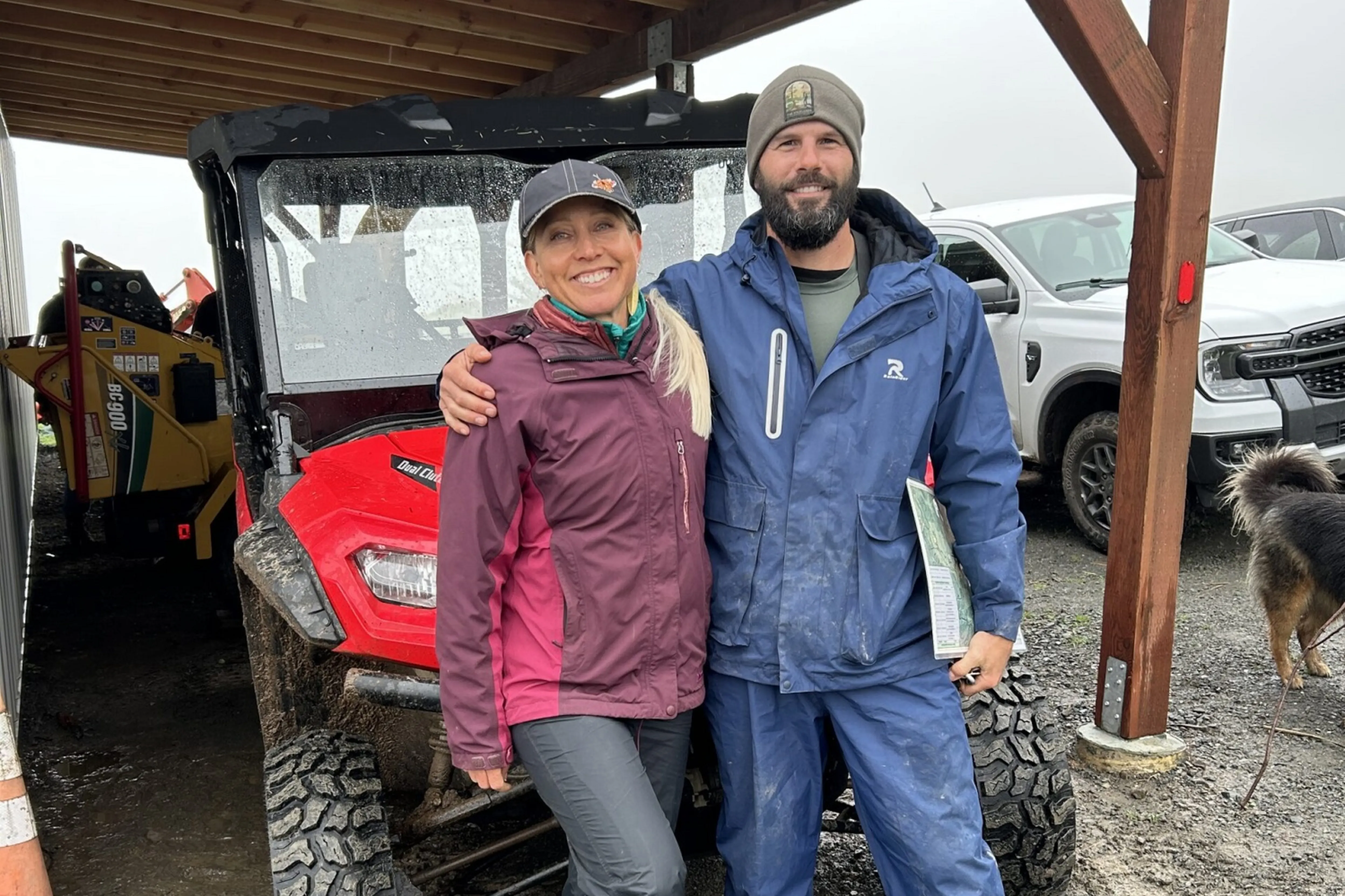
Partners also included the Kashia Band of Pomo Indians.
“They’ve been managing these landscapes with fire long before we were here, and we’re trying to learn from that wisdom.” Berger said. “We involve their Tribal heritage preservation officer and conduct archaeological surveys to make sure we’re not going to impact any artifacts during all of our forest management work.”
Forest treatment units were collectively created using techniques from shaded fuel breaks to large-scale prescribed burns, always with the dual goals of habitat restoration and fire resilience. As part of their strategy, the project team minimized soil disturbance to protect cultural artifacts and maximize ecological value, while retaining mature trees to shade out resprouts, provide wildlife habitat and foster wildfire adaptability.

“We’re not trying to stop fire — we’re trying to bring back good fire under the right weather and fuel conditions so that the landscape is more resilient when wildfires do occur,” said Edwards.
“It’s all about relationships. The Hawk Watch on Jenner Headlands started through personal connections with birders. Now they’re out there weekly, logging weather, raptor counts — even bobcat sightings. There’s this deep allegiance to place.”
Next steps
Looking ahead, both Sonoma Land Trust and The Wildlands Conservancy plan to expand prescribed burning, deepen their collaboration with tribal communities, and continue bird monitoring as a tool for adaptive management. In 2024, they’re preparing for a large-scale prescribed burn at Little Black Mountain — which will span from ridgeline to ridgeline, shaped by the contours of the landscape — designed to reduce fuels while preserving soil integrity and protecting cultural sites.
Their efforts are also sparking interest across the region. The Sonoma Ecology Center, for example, is incorporating bird monitoring into a guidebook for defensible space, a sign that this approach is influencing broader conversations about fire and forest management.
Funders are paying attention too.
“During one site visit, a foundation program officer was keenly interested in this project, as it provides an example of habitat enhancement with metrics,” Edwards said.

In a region shaped by fire and resilience, this project is showing how science, tradition and community can work in harmony.
“You don’t do forest management and walk away,” says Berger. “It takes maintenance, iteration and monitoring. Birds give us a way to track whether we’re moving the needle in the right direction.”
The views, thoughts and opinions expressed in this blog are the author's own and do not necessarily reflect the views of the Land Trust Alliance, its staff, its board of directors or any other individuals associated with the organization.